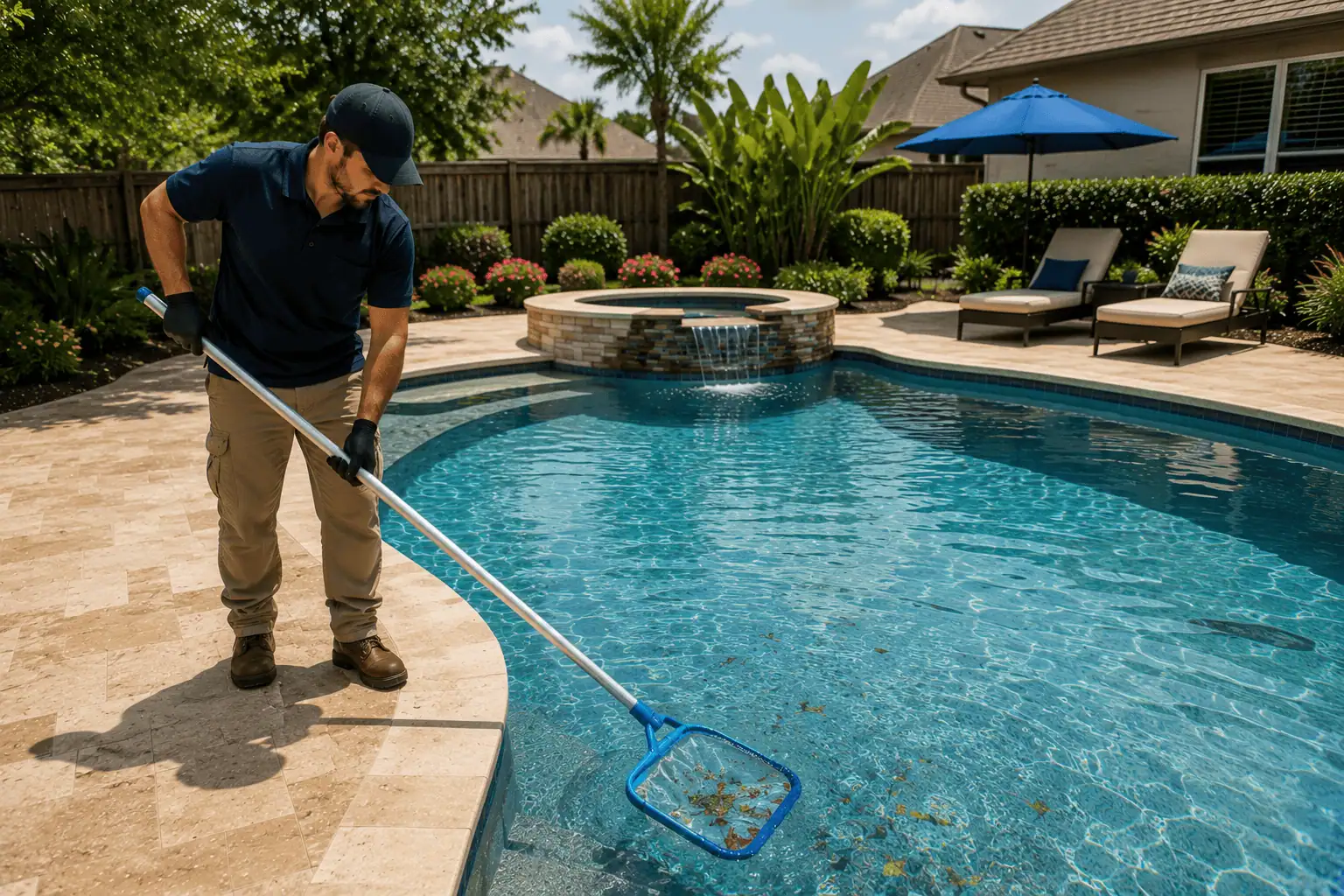
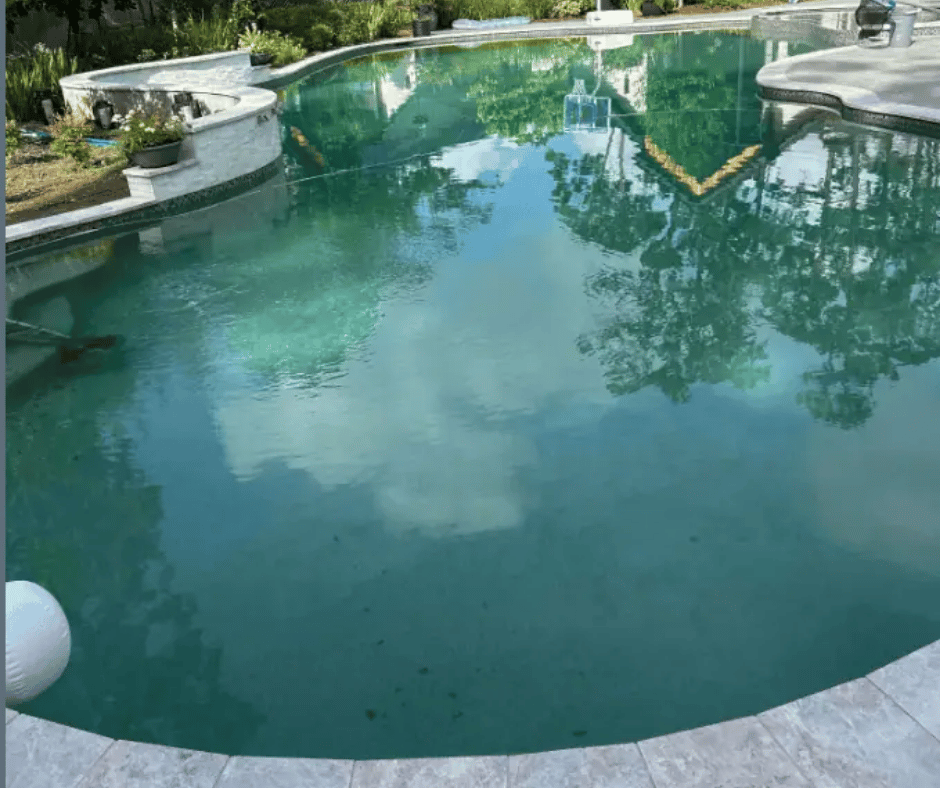
If you own a pool in Cypress, Texas, you are no stranger to the challenge of keeping the water clean, clear, and inviting. The hot, humid climate of Southeast Texas creates nearly perfect conditions for one of the most persistent nuisances pool owners face: algae. Whether you have noticed a faint green tint to your water, slippery black patches on the walls, or a cloudy yellow haze that will not clear up, algae may be to blame. Understanding pool algae problems in cypress and how to eliminate it and keep it from coming back is essential for every pool owner.
Why Cypress Pools Are Especially Vulnerable
Cypress sits in Harris County, where summer temperatures routinely exceed 95°F and the humidity often feels suffocating. These environmental factors are a dream scenario for algae growth. Algae are microscopic, plant-like organisms that thrive in warm, stagnant water with access to sunlight and nutrients. When pool water is not properly balanced or circulated, algae colonies can establish themselves within 24 to 48 hours.
The long Cypress swimming season stretching from April through October means pools are under stress for many months each year. Heavy summer rainstorms wash airborne contaminants, dirt, and phosphates directly into the water, rapidly destabilizing carefully maintained chemical levels. All of these factors combine to make Cypress one of the more challenging environments in the country for pool maintenance.
Common Types of Pool Algae
Not all algae are the same, and identifying the type you are dealing with is the first step toward an effective solution.
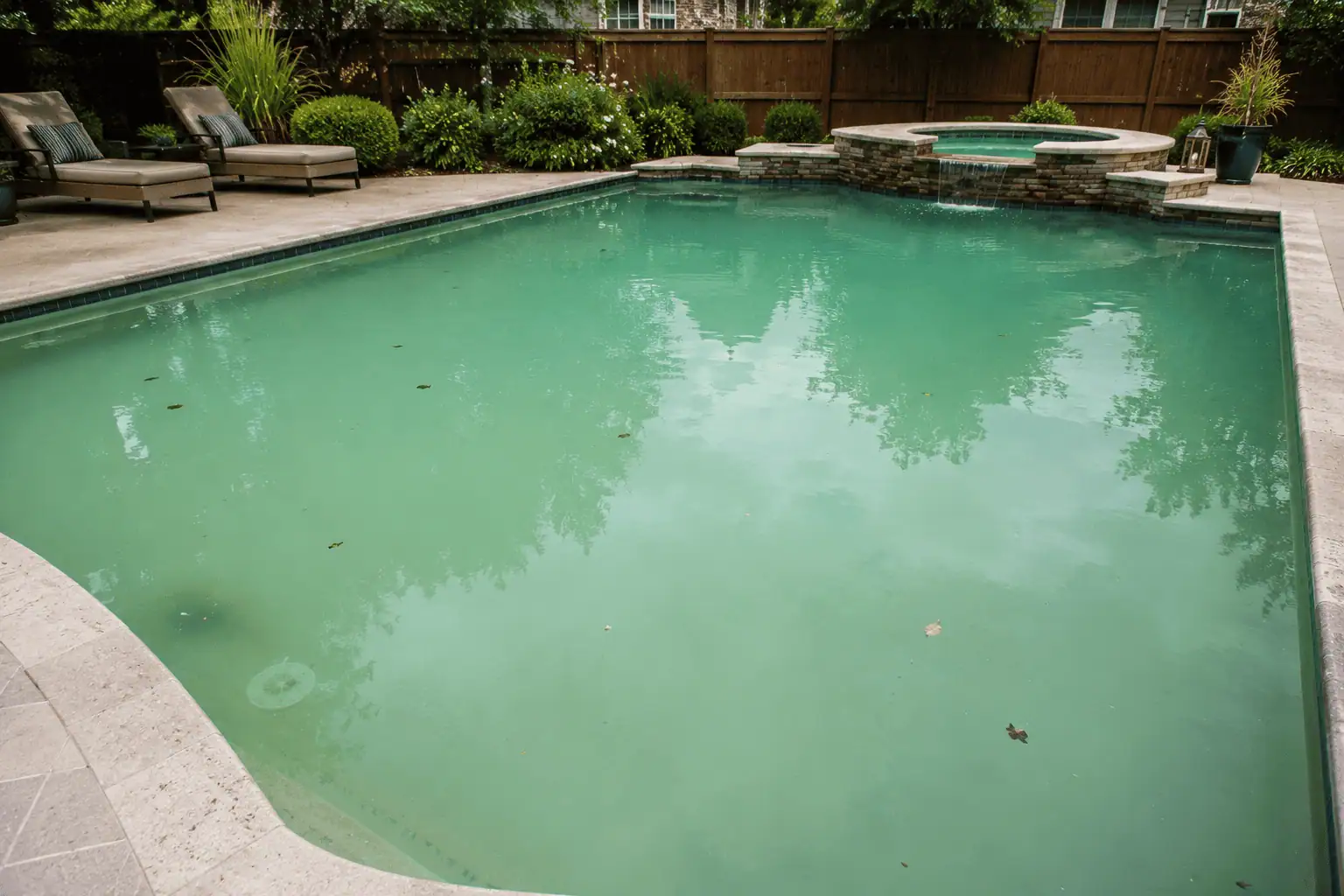
Green Algae: The most common variety, green algae makes water look cloudy or turns it a vivid green color. It can also coat pool surfaces and clog filters. Green algae spreads quickly and is usually caused by low chlorine levels or poor circulation.
Yellow (Mustard) Algae: This variety clings stubbornly to pool walls and floors, often in shaded areas. It is chlorine-resistant and can be confused with sand or dirt. Mustard algae frequently returns after treatment if not fully eradicated.
Black Algae: The most difficult type to eliminate, black algae develops deep roots in pool surfaces and forms a protective outer layer that shields it from chemicals. It appears as dark blue-green or black spots, often embedded in plaster or concrete. Eliminating black algae typically requires aggressive brushing and repeated shock treatments.
Root Causes of Algae in Cypress Pools
Several factors contribute to algae growth in Cypress pools:
Low or Inconsistent Chlorine Levels: Chlorine is your primary defense against algae. In Cypress’s heat, chlorine degrades faster than in cooler climates. Free chlorine should be maintained between 1–3 ppm at all times.
Improper pH Balance: When pH rises above 7.8, chlorine becomes significantly less effective. Rainwater and swimmer activity both push pH levels upward, making frequent testing essential.
Poor Circulation: Dead zones in your pool and areas where water barely moves are prime spots for algae to take hold. Running your pump for at least 8–10 hours daily helps prevent stagnation.
Dirty or Worn Filters: A clogged filter cannot remove algae spores before they establish colonies. Regular backwashing and weekly pool cleaning are non-negotiable.
High Phosphate Levels: Phosphates are nutrients that feed algae. They enter pools through rainwater, leaves, fertilizers, and even some pool chemicals. Using a phosphate remover regularly can starve algae before it blooms.
How to Treat Pool Algae
Once algae has taken hold, follow these steps to reclaim your pool:
1. Brush Thoroughly: Use a stiff pool brush to scrub all surfaces, walls, floor, steps, and behind ladders. This breaks up algae colonies and exposes them to sanitizer.
2. Shock the Pool: Add a large dose of pool shock to the water, typically 1–3 pounds per 10,000 gallons depending on the severity. Shock at dusk to prevent UV rays from degrading the chlorine before it can work.
3. Apply an Algaecide: Use a pool-grade algaecide to supplement the shock treatment, especially for mustard or black algae. Allow it to circulate for at least 24 hours.
4. Run Your Filter Continuously: Keep the pump running 24 hours a day during treatment. Clean or backwash the filter frequently so dead algae does not clog the system.
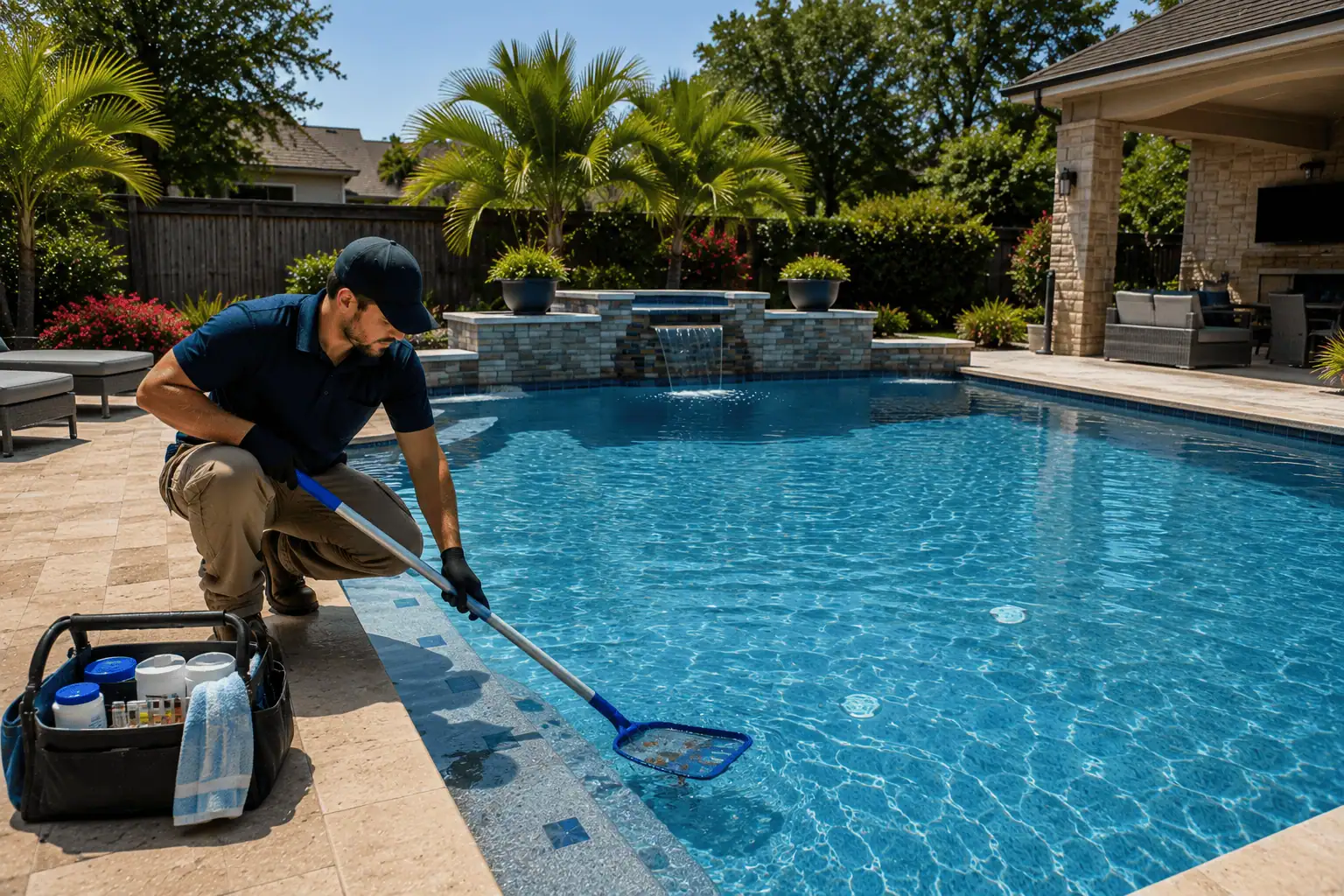
5. Vacuum and Test: Once the water clears, vacuum dead algae from the bottom. Test and rebalance all chemical levels before swimming resumes.
Prevention: Keeping Algae Out of Your Cypress Pool
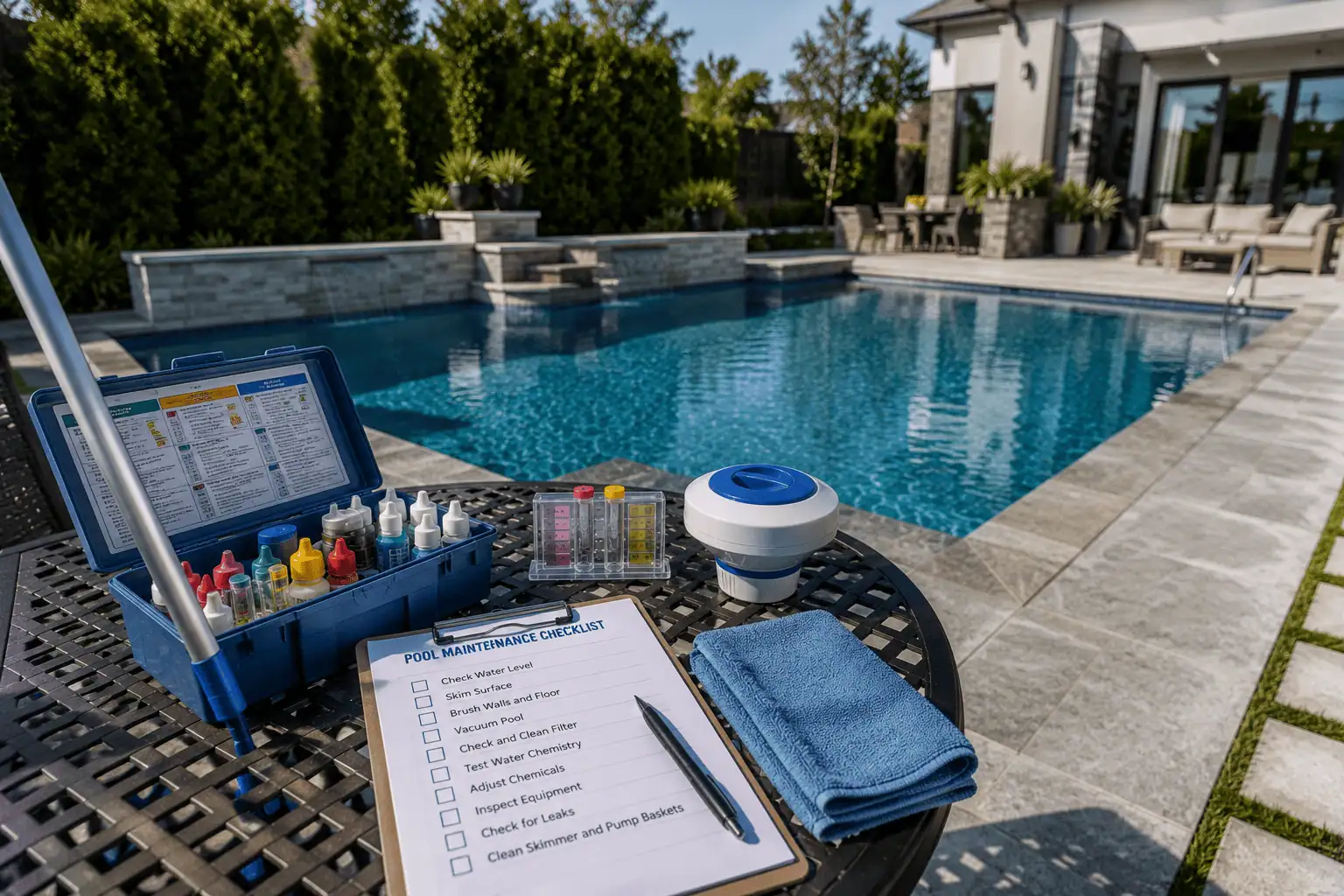
Prevention is always easier than treatment. Test your water at least twice a week during summer. Maintain free chlorine between 1–3 ppm and pH between 7.4 and 7.6. Use a weekly algaecide as a preventive measure during peak season, and have your filter professionally serviced at least once a year. After every heavy rainstorm, a regular occurrence in Cypress, test and rebalance your water immediately. Keeping phosphate levels below 200 ppb with a phosphate remover will also significantly reduce the likelihood of algae blooms.
Trust Cabana Pools Aquatech for Expert Algae Solutions in Cypress
When algae gets out of hand or when you simply want to stay ahead of the problem with professional support Cabana Pools Aquatech is the team Cypress homeowners trust. With deep expertise in the unique challenges posed by the Texas climate, Cabana Pools Aquatech offers comprehensive pool maintenance, water chemistry testing, pool algae treatment, and equipment inspection services tailored specifically to local conditions.
Their experienced technicians understand that no two pools are alike. Whether you are battling a stubborn black algae outbreak or looking to set up a proactive maintenance that keeps your water sparkling all season long. For Cypress pool owners who want reliable, professional care backed by real local experience, Cabana Pools Aquatech is the clear choice. Reach out today to schedule a water analysis or maintenance visit and take the guesswork out of pool care.
Conclusion
Algae is a persistent adversary for pool owners in Cypress, but it is far from unbeatable. With a solid understanding of why it grows, how to identify it, and how to treat and prevent it, you can keep your pool sparkling throughout the long Texas swimming season. Consistency is the key to regular testing, proactive maintenance, and quick action at the first sign of trouble will save you significant time, money, and frustration. When in doubt, do not hesitate to consult Cabana Pools Aquatech who understands the unique demands of maintaining a pool in the Cypress area.