
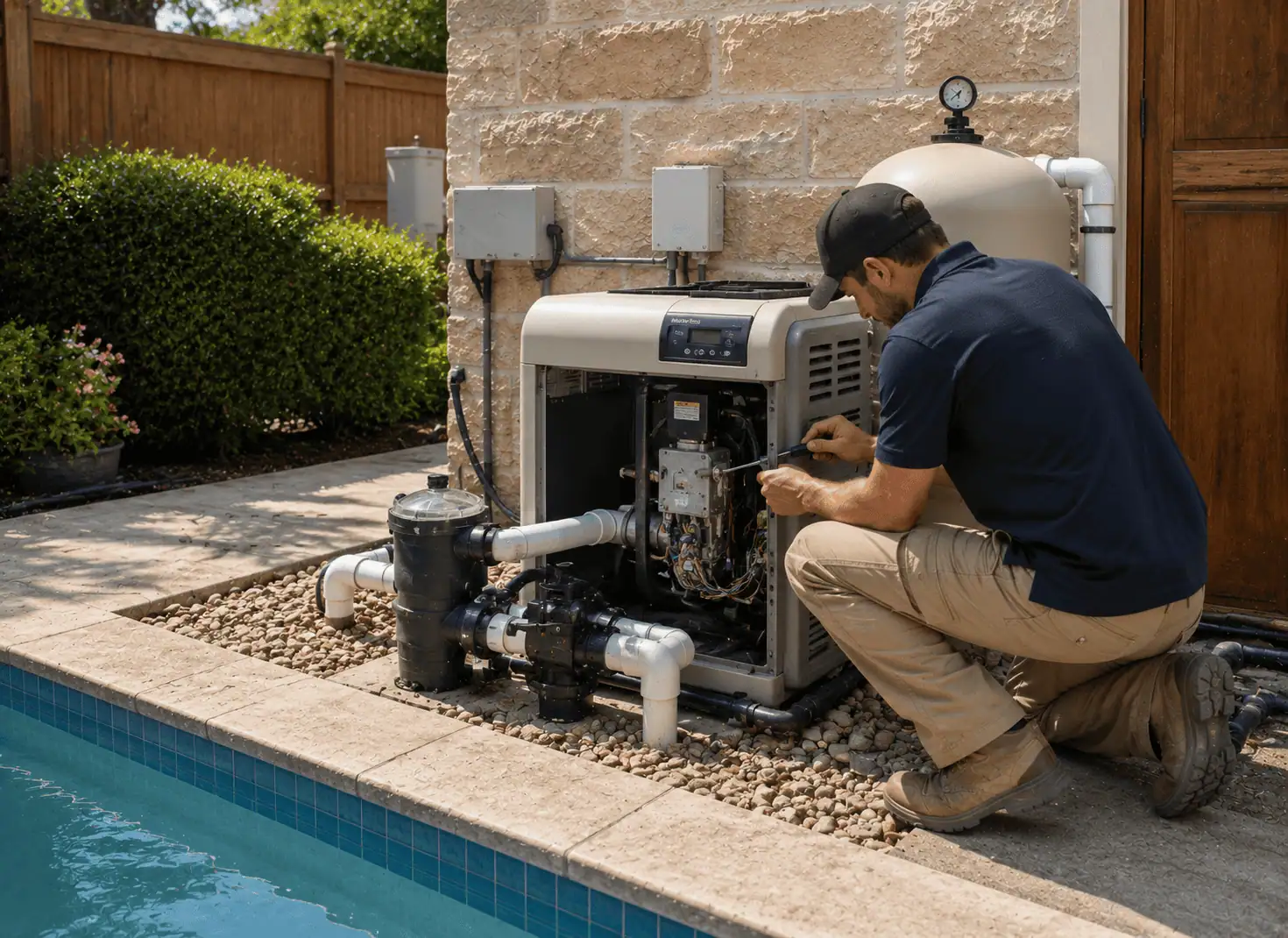
Pool Heater Repair in Houston, TX
A pool heater that will not fire, cannot reach temperature, or shuts off mid-cycle does not just mean cold water. It means your spa is unusable on winter evenings, your swim season gets cut short by months, and a problem that starts as a minor component failure can escalate into a full replacement if it is not diagnosed correctly.
Cabana Pools Aquatech provides professional pool heater repair in Houston, TX for gas and propane pool heaters from all major manufacturers. We diagnose the specific cause of the failure, explain what needs to be fixed and why, provide a clear estimate before starting work, and complete the repair properly so your heater runs reliably and efficiently.
We have been repairing pool heaters across Houston since 1976 and understand how this climate specifically affects heater performance, component life, and long-term reliability. Houston’s humidity, hard water, and year-round heater use create conditions that accelerate wear on components that would last longer in less demanding environments.
Common Problems
Common Pool Heater Problems Houston Homeowners Experience
Pool heaters are complex systems with multiple components that can fail independently. Here are the issues our technicians diagnose and repair most frequently in Houston.
Heater Will Not Ignite
You hear the click or see the spark, but the burner does not light. Causes include a failed igniter, a corroded flame sensor, a faulty gas valve, a blocked orifice, or a control board issue. Houston’s humidity accelerates corrosion on ignition parts.
Fires But Won't Reach Temperature
The burner lights and runs, but the water never gets warm enough. This typically points to scaling inside the heat exchanger from Houston’s hard water, an undersized heater, low gas pressure, or a thermostat calibration issue.
Heater Shuts Off Mid-Cycle
The heater fires, runs briefly, then shuts down. Most often caused by a low-flow shutdown from a dirty pool filter or weak pump flow. Other causes include a failing high-limit switch or blocked exhaust.
Error Codes on the Display
Modern heaters flag ignition failure, high limit lockout, pressure switch faults, and flame sensor errors. We read and interpret these codes for all major brands as a starting point for systematic diagnosis, not a simple reset.
Heater Is Leaking Water
Water at the cabinet, heat exchanger, or header connections points to a failed gasket, cracked header, or corroded exchanger. Caught early it may be repairable; advanced corrosion typically means replacement.
Unusual Smells or Sounds
A sulfur smell can indicate a gas leak. Turn off the breaker and call us immediately. Rumbling or popping sounds during operation usually point to scale buildup causing uneven heating and steam pockets.
Weekly Customers Catch Heater Problems Before They Fail
If you are on our weekly pool cleaning service, your technician visually inspects equipment operation during every visit. They notice when the heater cabinet is showing corrosion. They flag rust stains or water spots that suggest a developing leak. They report unusual sounds during operation. They catch error codes on the display before you notice the water is cold.
That early detection means the difference between a component repair and a complete heater failure. A flame sensor that gets replaced proactively keeps the heater running reliably for years. The same flame sensor ignored until it fails completely can cause repeated ignition lockouts that stress the control board and other components.
Most of our long-term weekly customers get significantly more life out of their heaters because issues get flagged and addressed early rather than running until catastrophic failure.
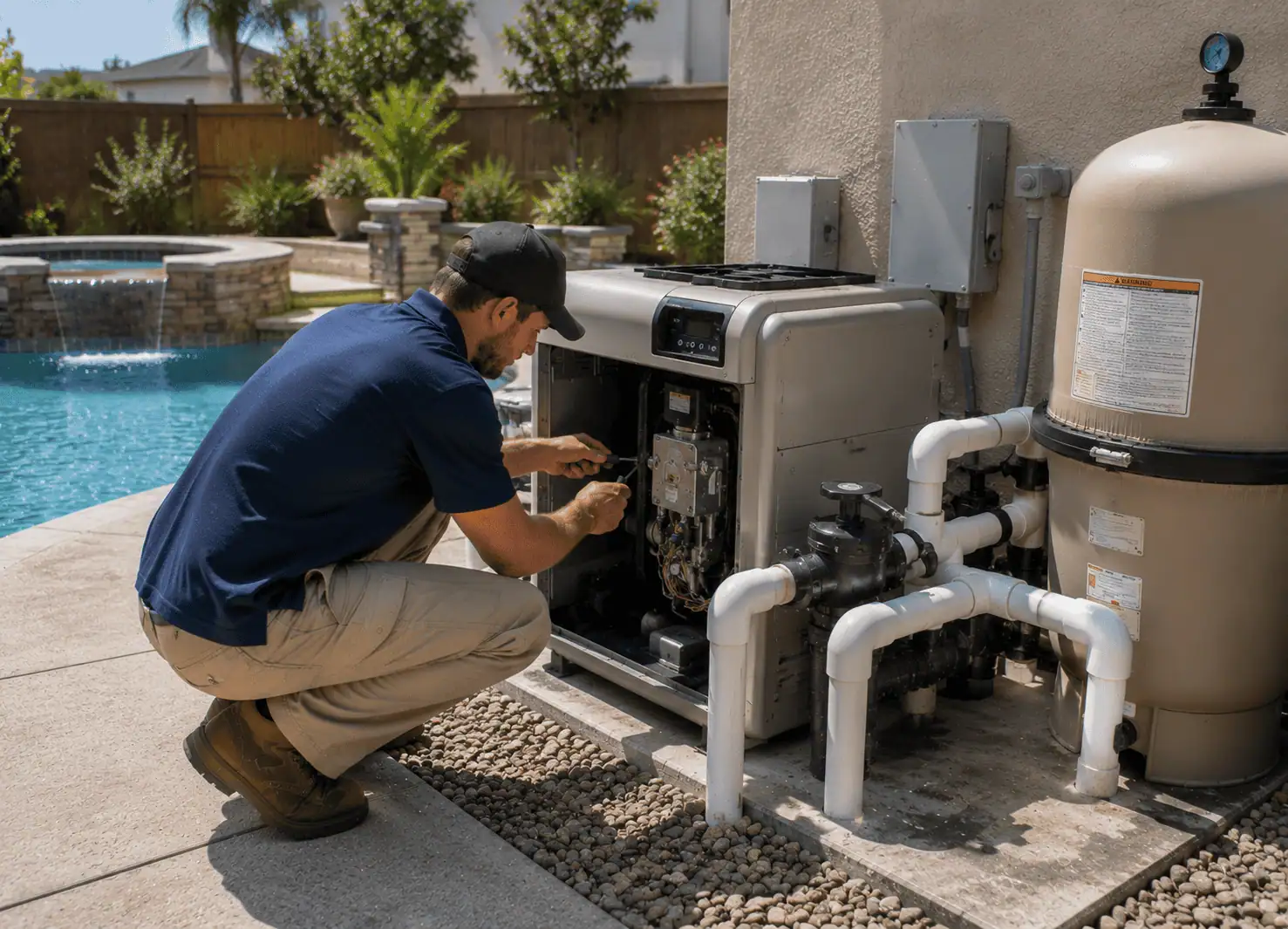
What Houston Pool Owners Are Saying About Our Work
Pool Heater Repair Across Greater Houston
We provide pool heater repair and replacement throughout Houston and surrounding communities.
Houston Neighborhoods: Memorial, River Oaks, Tanglewood, Bellaire, West University Place, Meyerland, The Heights, Garden Oaks, Spring Branch, Energy Corridor, Bunker Hill Village, Hedwig Village, Hunters Creek Village, Piney Point Village, Spring Valley Village, Afton Oaks, Royal Oaks
Surrounding Cities: Cypress, Katy, Spring, Jersey Village, Tomball, Magnolia, The Woodlands, Sugar Land, Pearland
Pool Heater Repair Questions Houston Homeowners Ask
Why is my pool heater not turning on?
The most common causes are a failed igniter, a corroded flame sensor that cannot detect the pilot, a faulty gas valve, a tripped high-limit switch, or a control board error. Houston’s humidity accelerates corrosion on ignition components, making this the most frequent heater repair call we receive. A professional diagnosis identifies the specific failed component so the repair targets the actual cause.
Why does my pool heater keep shutting off?
The most frequent cause is a low-flow condition caused by a dirty pool filter or insufficient pump flow. The heater’s pressure switch detects low water flow and shuts the unit down as a safety precaution. Cleaning or replacing the filter often resolves the issue. Other causes include a failing high-limit switch, blocked exhaust, or an intermittent electrical connection.
Can a pool heater be used in cold weather in Houston?
Yes. Gas and propane pool heaters operate effectively in any temperature because they generate heat by burning fuel. Most Houston homeowners with attached spas use them throughout winter, including during the coldest conditions. There is no temperature limitation on gas or propane heater performance.
How long do pool heaters last in Houston?
Gas heaters in Houston typically last 8 to 12 years with proper maintenance. Heat pumps can last 10 to 15 years. Actual lifespan depends on usage frequency, water chemistry management, and how quickly repairs are addressed when components begin to fail. Heaters on pools with consistent weekly professional service tend to last longer because issues are caught and resolved before they cause cascading damage.
What size pool heater do I need?
We recommend 400,000 BTU gas heaters for most Houston residential pools. A properly sized heater reaches temperature faster and runs shorter cycles, which is more efficient and puts less wear on components than an undersized unit running constantly. For properties without natural gas, propane heaters in the same BTU range deliver identical performance. We evaluate your pool and recommend the right unit during the service visit.
Can hard water damage my pool heater?
Yes. Houston’s mineral-rich water deposits calcium scale inside the heat exchanger over time. This scaling reduces heat transfer efficiency, increases fuel consumption, and can eventually cause the heat exchanger to overheat, crack, and leak. Maintaining proper water chemistry through consistent professional maintenance slows the scaling process significantly.
Get Your Pool Heater Working Again
Do not let a small problem become a big one. Send us a message today, and we will diagnose the issue, explain the fix, and get your heater running properly.