Your pool surface takes more punishment than any other part of your pool. It sits underwater every day of the year, dealing with chemicals, UV rays, temperature swings, and Houston’s hard water. Over time, that constant exposure breaks the surface down
Houston makes this worse. The UV is stronger here, the heat lasts longer, the water is harder, and the chemical demand is higher than in most other cities. Pool surfaces in the Houston area wear out faster than the same materials would in a milder climate.
The trick is knowing when normal aging has crossed into a problem that’s costing you money, making maintenance harder, and hurting your pool’s value. Here are seven signs that it’s the time for pool remodeling in Houston.
1. The Surface Feels Rough Like Sandpaper
This is usually the first sign homeowners notice. Someone scrapes a foot or knee on the pool floor, and suddenly that smooth surface isn’t smooth anymore.
This happens because pool chemicals and UV slowly dissolve the cement in your finish. Houston’s hard water makes pH harder to manage, which speeds up the process. Once the smooth top layer wears away, the rough aggregate underneath gets exposed.
A rough surface isn’t just uncomfortable. It traps algae, absorbs more chlorine, and makes your pool harder to keep clean. If running your hand across the wall feels gritty, resurfacing should be on your radar.
2. Stains That Won’t Come Out
Houston pools deal with several types of stains. Metal stains from iron or copper in the water show up as brown, green, or purple marks. Organic stains come from leaves and tree debris sitting on the surface too long. Calcium scale from Houston’s hard water creates rough white deposits along the waterline.
Surface-level stains on a newer finish can often be treated with chemicals or a professional acid wash. But acid washing can only be done a limited number of times before the surface becomes too thin. If your pool has already been acid washed and stains keep coming back, the finish is used up and resurfacing is the only lasting fix.
3. Cracks in the Surface
Not all cracks mean the same thing.
Surface cracks (sometimes called check cracking) look like fine spiderweb patterns across the finish. They’re caused by the surface shrinking and expanding with Houston’s temperature swings. These cracks are cosmetic at first, but they let chemicals and water seep beneath the finish, which leads to bigger problems over time.
Structural cracks are different. They’re longer, wider, and straighter. They go through the finish and into the concrete shell beneath. These can be caused by Houston’s clay soil shifting underneath the pool. Structural cracks cause water loss and need professional repair before any resurfacing.
If you see widespread cracking across more than a quarter of your pool surface, or any crack wide enough to catch a fingernail, it’s time to call a professional.
4. Plaster Peeling or Flaking Off
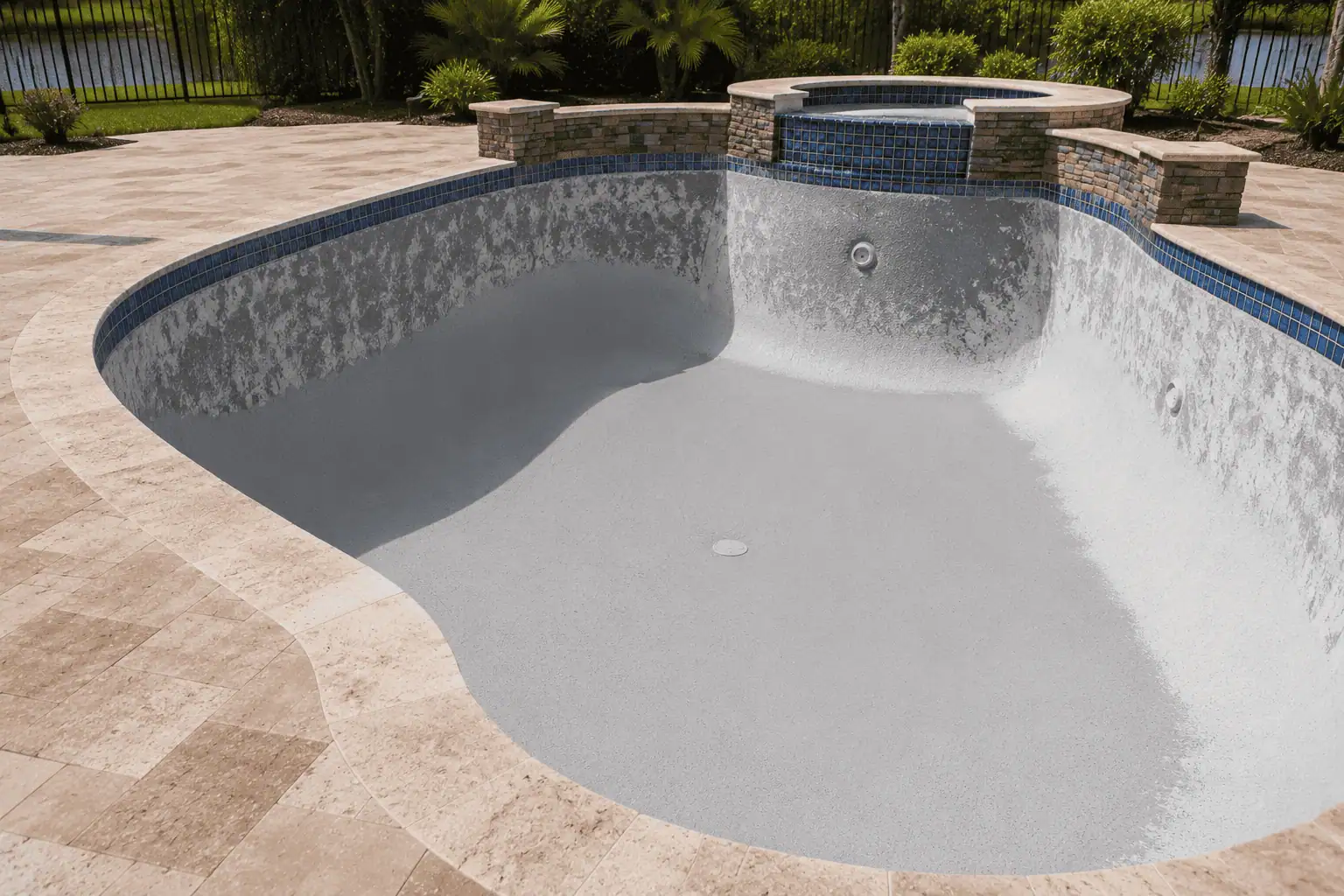
When the pool finish separates from the concrete beneath it, that’s called delamination. It shows up as sections of plaster that bulge, blister, and eventually peel away in chunks, exposing the gray concrete underneath.
This happens in Houston because chemical exposure weakens the bond over time. Freeze-thaw cycles during winter cold snaps can also cause trapped moisture to expand and push the finish loose. Poor original application can speed this up significantly.
Delaminated areas can’t be patched reliably. Patches always create visible seams and color mismatches. Once delamination starts, it tends to spread. The first peeling section is your signal that a full resurface should happen within the year.
5. Algae Keeps Coming Back Despite Good Chemistry
If your chlorine, pH, and stabilizer levels are consistently where they should be, and you’re still dealing with recurring algae, the problem might not be your chemistry. It might be your surface.
As a pool finish wears down and becomes rough and porous, it creates the perfect environment for algae to attach. The biofilm anchors into tiny surface cracks and rough spots where chlorine can’t fully reach it. Brushing helps temporarily, but on a worn surface, the algae comes back faster than it would on a smooth, intact finish.
An old surface also absorbs chlorine like a sponge. Your water test might show good readings at the surface, but the finish itself is pulling sanitizer out of the water, leaving less protection against algae growth.
If you’ve ruled out every other cause (chlorine levels, pump run time, filtration, phosphates, brushing) and algae still keeps returning, the surface is likely the issue. A fresh, denser finish like quartz or pebble often solves this permanently.
6. Your Chemical Costs Keep Going Up
A new pool surface is smooth and doesn’t absorb much chlorine. As it ages and deteriorates, it becomes porous and starts soaking up chemicals. More chlorine gets pulled into the surface material instead of staying in the water. More acid is needed because the dissolving cement pushes pH upward. More shock is required because the rough texture traps organic material.
Houston pool owners with older surfaces often find their chemical spending has jumped noticeably compared to when the finish was fresh. That increase compounds year after year as the surface keeps degrading.
Resurfacing resets this equation. A new quartz or pebble finish brings chemical demand back to normal and keeps it there for years.
7. Fading, Discoloration, or Uneven Color
A pool that used to be a uniform color but now looks patchy, faded, or washed out has reached the point where the finish isn’t performing anymore.
Houston’s intense UV breaks down pigments in colored plaster faster than in milder climates. Shallow areas, steps, and benches fade first because they get the most direct sun. This creates visible color differences between sun-exposed and shaded sections.
Houston’s hard water adds to the problem by depositing a whitish calcium haze on dark surfaces, muting the color depth and making the pool look dull.
Color fading alone might not require immediate action if the surface is still smooth and functional. But if fading comes alongside roughness, staining, or any other sign on this list, the finish has deteriorated across the board and resurfacing is the right move.
What to Do When You See These Signs
Get a professional assessment. Before committing to resurfacing, have a qualified Houston pool contractor evaluate the surface, the shell, the plumbing, and the equipment. At Cabana Pools Aquatech, our assessments check for hidden issues beneath the surface so you don’t resurface over unresolved structural problems that will come back through the new finish.
Choose the right finish. Standard plaster is the most affordable but has the shortest life in Houston’s climate. Quartz lasts significantly longer with better stain resistance. Pebble finishes offer the longest lifespan and the best UV and chemical resistance. Your contractor should walk you through the options based on your budget and how long you plan to stay in your home.
Time it right. Fall and early winter (October through January) offer better contractor availability and faster scheduling, with your pool ready well before the next swim season.