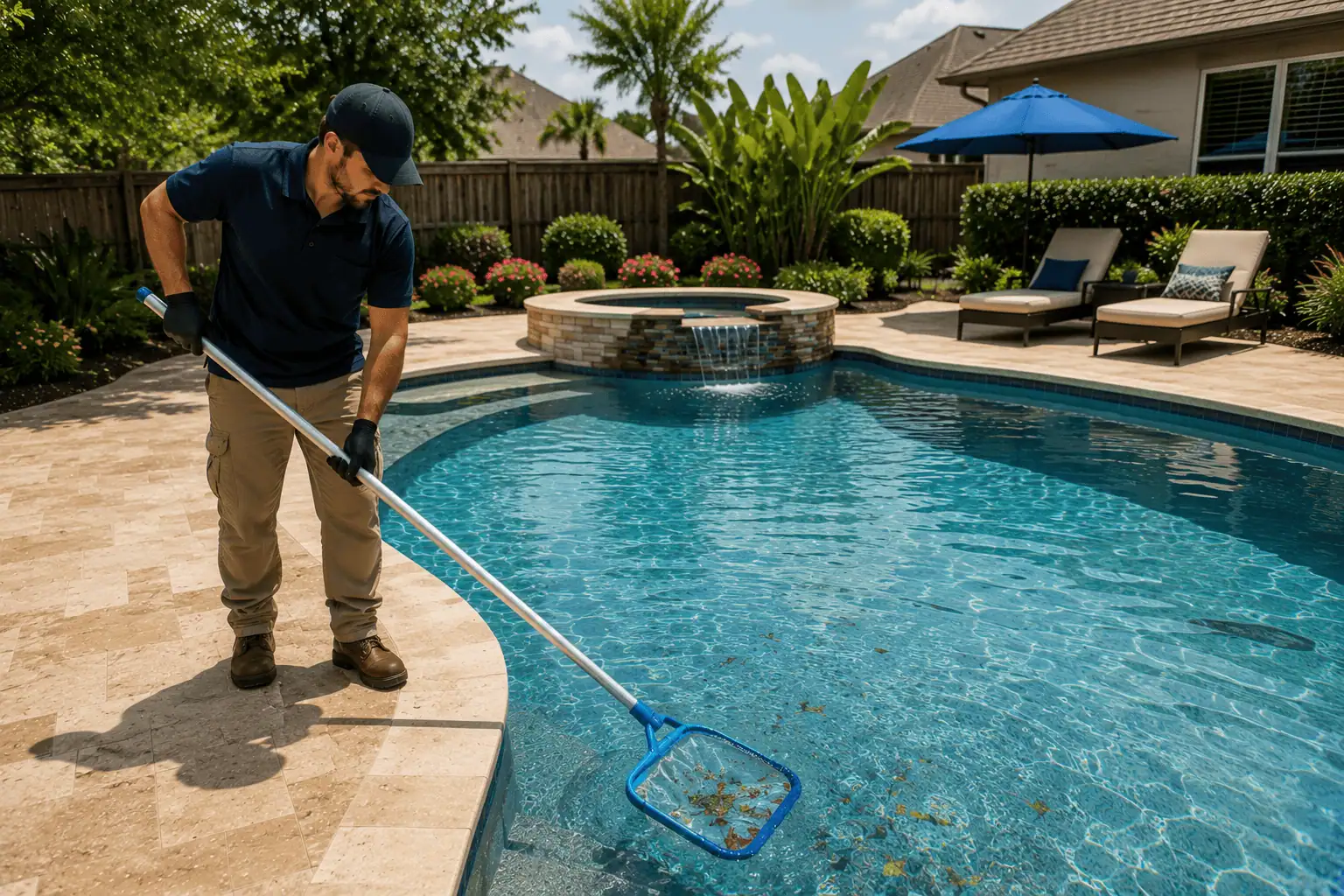
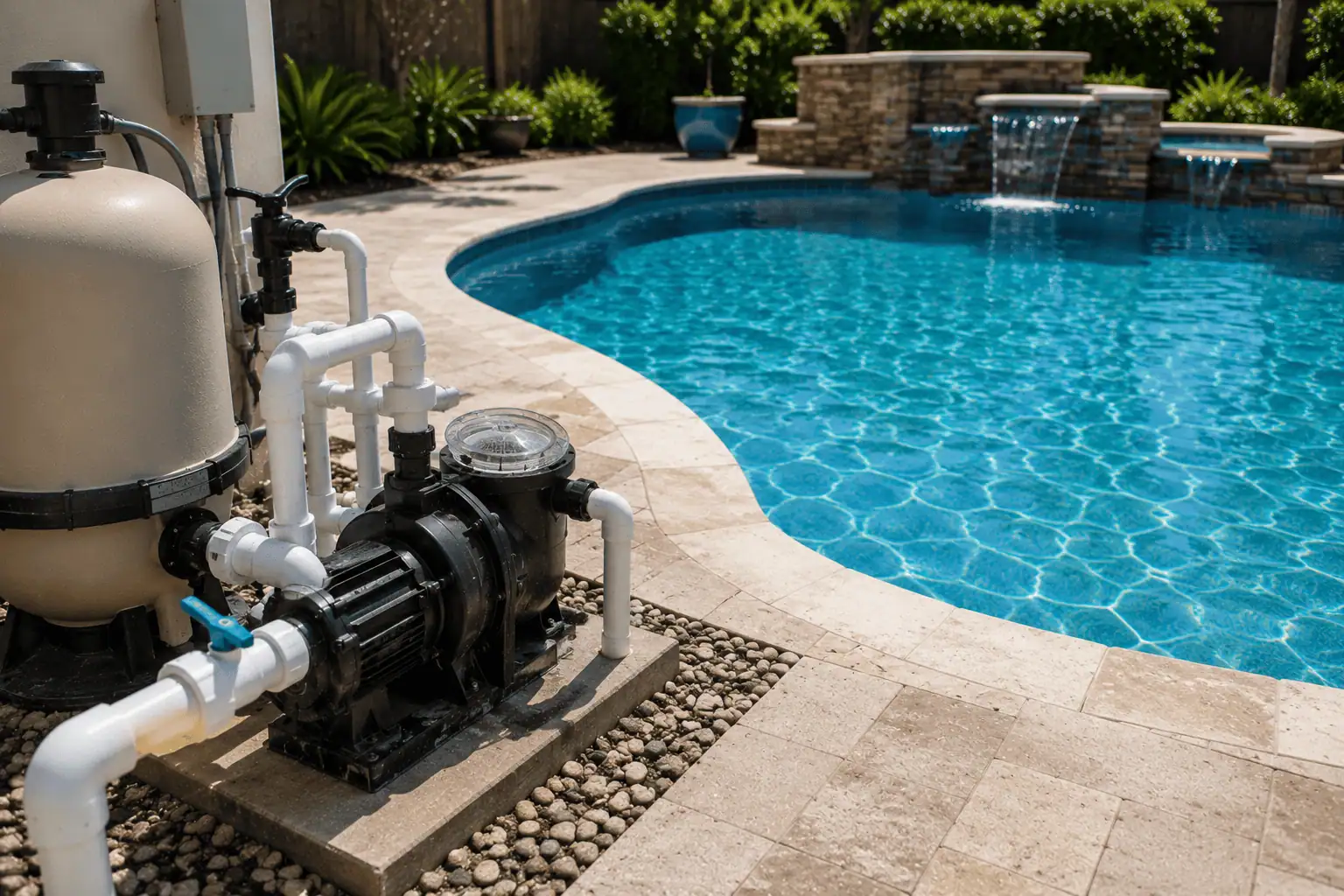
Your pool pump is the most important piece of equipment in your entire pool system. It circulates water through the filter, distributes chemicals, powers water features, and keeps the pool from becoming a stagnant breeding ground for algae and bacteria. Every other component depends on the pump moving water reliably.
Despite this, most Houston homeowners never think about their pump until it stops working. By that point, the damage has often spread to the motor, connected equipment, water quality, and the overall performance of the pool.
Routine pool pump inspections help identify developing issues before they become major problems. Here’s why they matter, what they include, and why Houston’s climate makes them especially important.
What Happens When Pump Problems Go Undetected
Pool pump failures rarely happen overnight. They usually develop gradually, with warning signs that are easy to miss without a professional inspection.
Stage 1: Reduced performance. Flow rate begins to decline because of a worn impeller, a developing suction leak, or aging bearings. The pool may still appear clean, but the pump works harder than necessary and overall system efficiency begins to decrease.
Stage 2: Visible symptoms. Water clarity starts to decline. The pump becomes louder. Air bubbles appear in the return jets. The pump may struggle to prime after being off overnight. Many homeowners respond by adding more chemicals instead of investigating the circulation system.
Stage 3: Equipment stress. Reduced water flow places additional strain on the filter, heater, salt system, and other pool equipment. Components designed to operate under steady circulation begin experiencing inconsistent performance, increasing wear throughout the system.
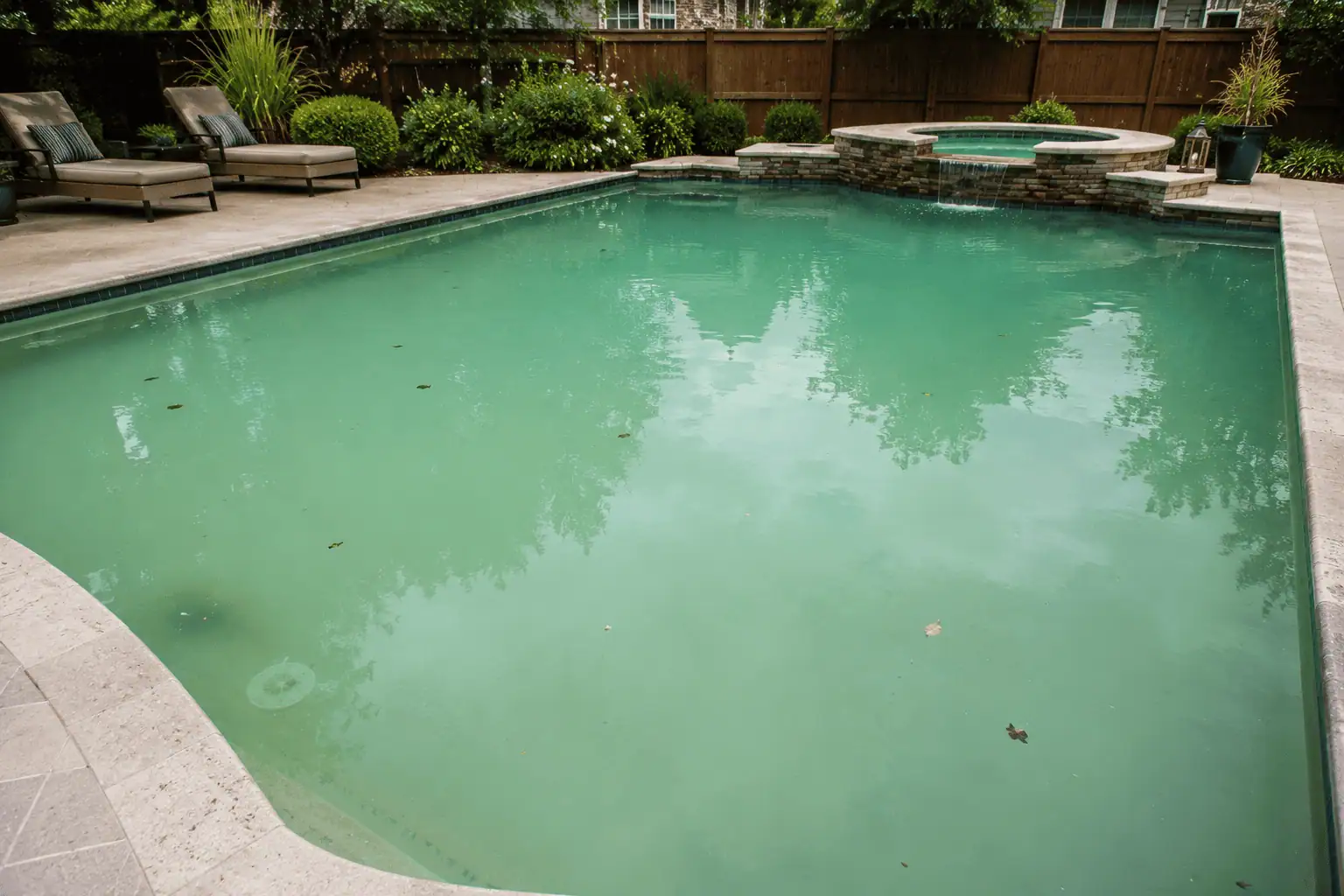
Stage 4: Complete failure. Eventually, the pump stops working altogether. During Houston’s hot summer months, a pool without proper circulation can turn green in as little as 24 to 48 hours. Restoring water quality and repairing the equipment becomes significantly more involved than addressing the issue early.
A routine inspection that catches problems during the early stages can prevent unnecessary pool repair in Houston, improve reliability, and keep your pool operating efficiently.
What a Routine Pump Inspection Covers
A professional inspection evaluates three critical areas: mechanical, hydraulic, and electrical.
Mechanical: The technician listens for bearing noise and vibration, checks the shaft seal for leaks, inspects the impeller for damage or debris buildup, and examines the pump basket and housing for cracks or wear. Identifying these issues early helps reduce stress on the motor and extends the lifespan of the entire pump system.
Hydraulic: Flow rate is evaluated against the system’s normal operating performance. Suction-side fittings, unions, and the pump lid O-ring are inspected for air leaks. Discharge pressure is also checked to identify possible filter restrictions or plumbing issues affecting circulation.
Electrical: Voltage and amperage are tested to ensure the motor is operating correctly. Electrical connections are inspected for corrosion, while bonding, grounding, and GFCI protection are verified to maintain safe operation.
All electrical inspection and repair work must be performed by licensed technicians, as required by Texas state law. At Cabana Pools Aquatech, licensed electricians handle every electrical task without exception.
Why Houston’s Climate Is Harder on Pool Pumps
Houston is one of the toughest operating environments for outdoor pool equipment in the country.
Heat stress. When temperatures around the equipment pad regularly exceed 95 to 100 degrees during summer, motors have a harder time dissipating heat. Continuous exposure to high temperatures accelerates wear on bearings, windings, and other internal components.
Humidity and corrosion. Houston’s high humidity accelerates corrosion on electrical connections, fasteners, and motor housing components. Routine inspections help identify corrosion before it affects system performance or reliability.
Extended run times. During the summer, Houston pools often require 10 to 12 hours of daily circulation to maintain proper water quality. These extended operating hours increase wear on bearings, seals, impellers, and other moving components.
Storm season. Lightning, power surges, and outages place additional stress on pump motors and control electronics. A post-storm inspection helps identify hidden electrical damage before it develops into more serious equipment failures.
How Often to Schedule Inspections
With professional weekly pool service: Your pump receives a basic operational check during each service visit. A comprehensive inspection that includes electrical testing, flow evaluation, and a detailed mechanical assessment should be performed twice each year, ideally before and after Houston’s busiest swimming season.
Without professional pool service: Schedule a complete inspection at least twice per year. It’s also wise to arrange an inspection after severe storms, repeated loss of prime, unusual noises, visible leaks, or a circuit breaker that trips repeatedly.
DIY Checks Between Professional Visits
While professional inspections are essential, homeowners can perform a few simple checks between service visits.
Listen. A healthy pump should produce a smooth, consistent operating sound. Grinding, screeching, clicking, or excessive vibration usually indicates a developing mechanical issue.
Check the basket weekly. A cracked basket allows debris to reach the impeller, while an overfilled basket restricts water flow and increases strain on the pump.
Monitor filter pressure. An increase of 8 to 10 psi above the clean filter reading usually indicates it’s time to clean the filter. Consistently low pressure may point to circulation problems that should be professionally evaluated.
Look for leaks. Inspect the area beneath and around the pump regularly. Even a small leak can become a larger problem if left unaddressed as the leak repair is another task.
The Long-Term Value of Routine Inspections
Routine inspections are one of the simplest ways to extend the life of your pool equipment. Small issues such as worn seals, restricted water flow, loose electrical connections, or developing leaks are much easier to address before they place additional strain on the entire circulation system.
Preventive maintenance also helps your pump operate at peak efficiency. A well-maintained pump circulates water more effectively, supports better filtration, improves chemical distribution, and reduces unnecessary wear on connected equipment such as filters, heaters, chlorinators, automation systems, and water features.
Over time, homeowners who schedule regular inspections experience fewer unexpected breakdowns, more consistent pool performance, longer equipment life, and fewer service interruptions during Houston’s demanding swimming season.
If your pool still uses an older single-speed pump, upgrading to a modern variable-speed pump can improve energy efficiency, operate more quietly, reduce mechanical wear, and provide more consistent circulation throughout your pool system.
Keep Your Pump Running and Your Pool Clean
Your pool pump works harder in Houston than in almost any other city. The heat is more intense, run times are longer, humidity accelerates corrosion, and severe weather adds additional stress to pool equipment. Routine inspections are one of the most effective ways to keep your circulation system operating reliably throughout the year.
At Cabana Pools Aquatech, pump and equipment monitoring is included with every weekly pool service visit. For homeowners who want a more comprehensive evaluation, our licensed technicians perform detailed mechanical, hydraulic, and electrical inspections designed specifically for Houston pools.
We’ve been maintaining pool equipment across Houston, Cypress, Bellaire, Memorial, the Energy Corridor, Katy, and surrounding communities for over 49 years. Our team understands how Houston’s climate affects every part of your pool system, and we help keep it operating at its best.
Contact Cabana Pools Aquatech to schedule a professional pool pump inspection, or call (713) 467-3700 today.