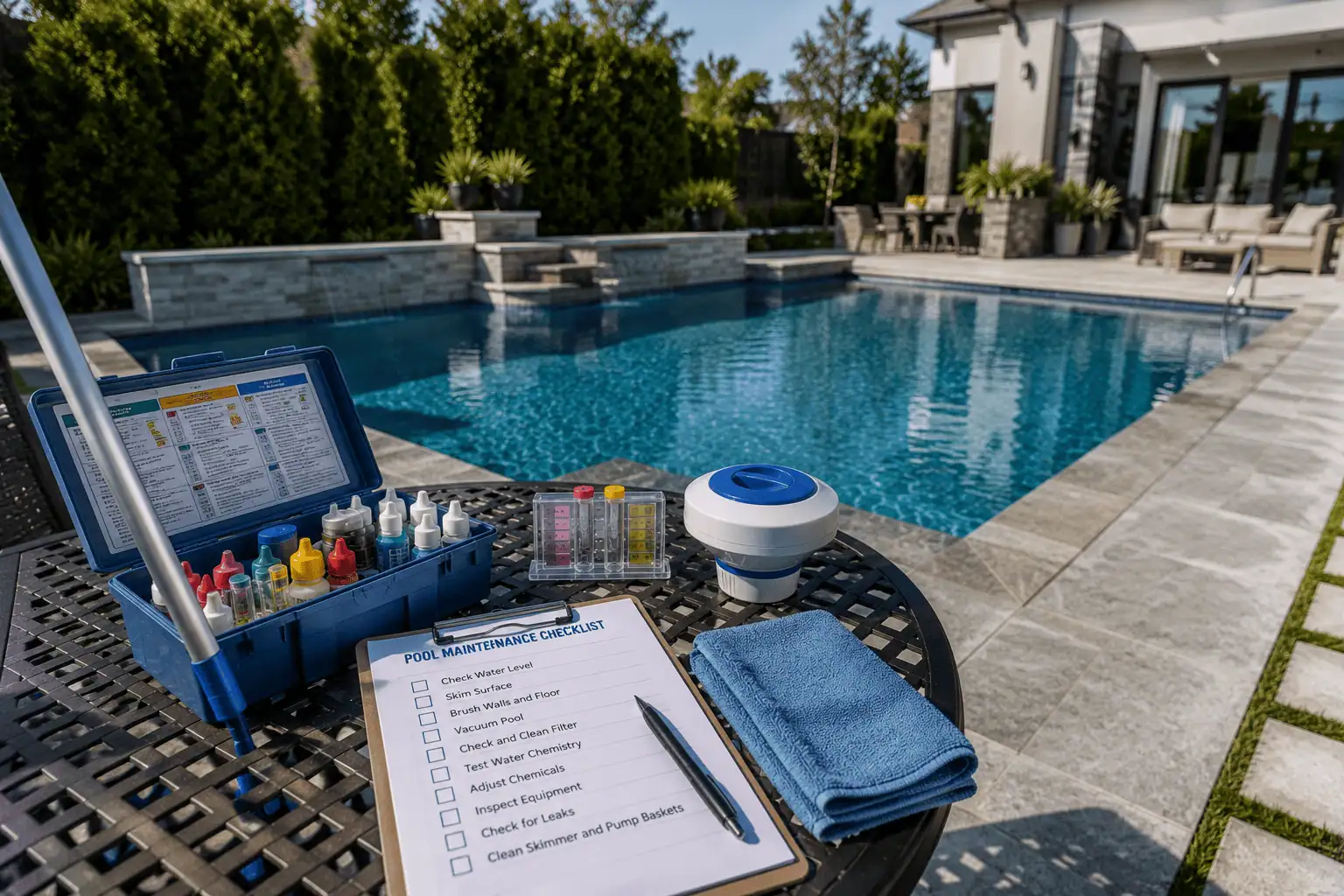
Generic pool maintenance checklists don’t work in Houston. They’re written for an average climate, and Houston’s climate is anything but average. The UV is more intense, the heat lasts longer, the humidity feeds algae faster, the water is harder, and the tree canopy drops debris 12 months a year.
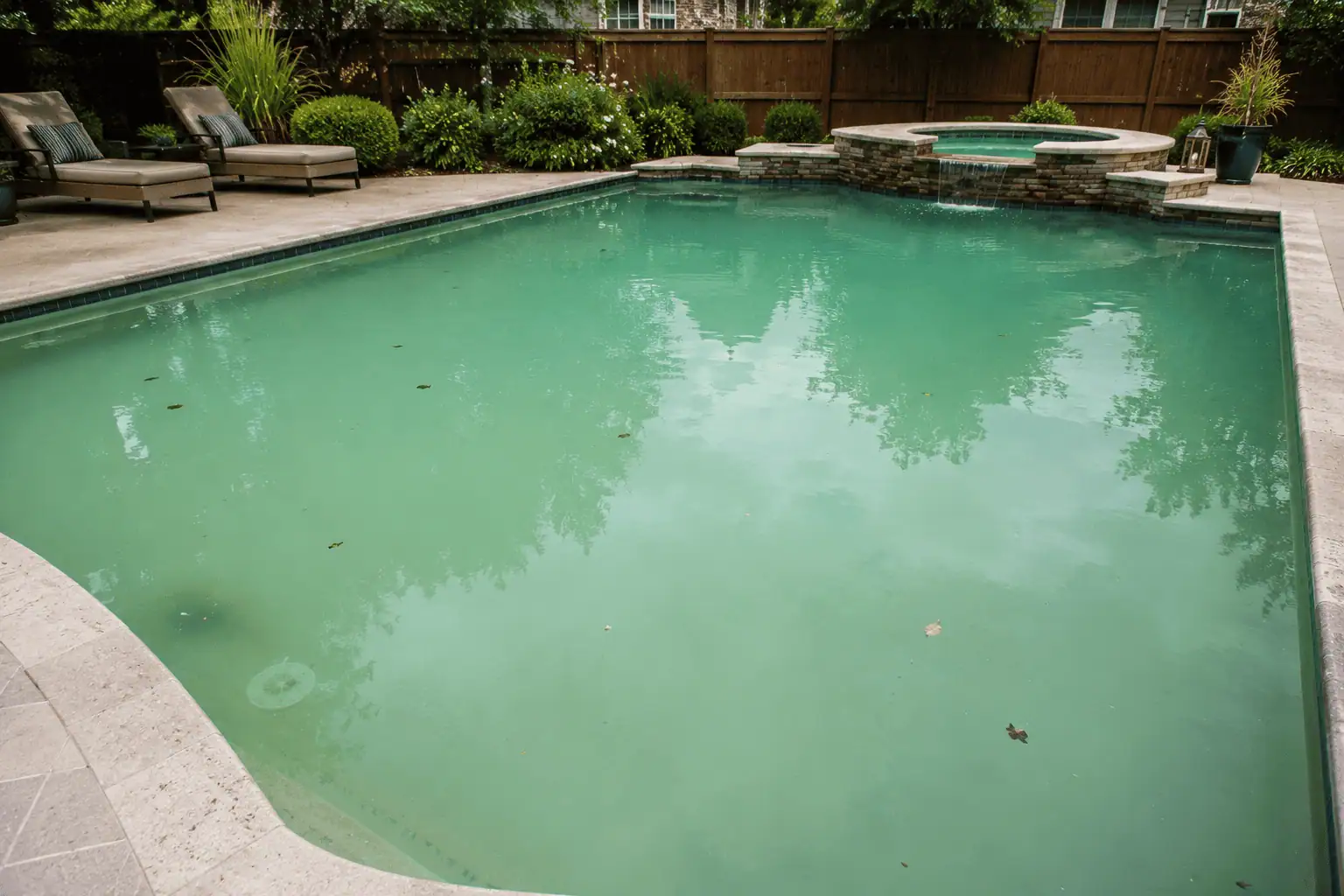
A checklist that tells you to “test your water weekly” without mentioning that Houston summers demand twice-weekly testing is a checklist that will cost you a green pool by July.
This one is different. Every task, every frequency, and every seasonal adjustment is calibrated specifically for the greater Houston area. Follow it consistently and your pool will stay clean, balanced, and swim-ready all year long.
Want a printable version? Download the free PDF checklist at the bottom of this page and keep it by your pool equipment.
Weekly Tasks (Year-Round)
These are non-negotiable. Every Houston pool needs these done every single week without exception.
Test and balance water chemistry: Check free chlorine, pH, and total alkalinity. Adjust as needed to keep chlorine between 2 and 4 ppm, pH between 7.4 and 7.6, and alkalinity between 80 and 120 ppm. During summer (June through September), test twice per week because Houston’s heat and UV shift these numbers fast.
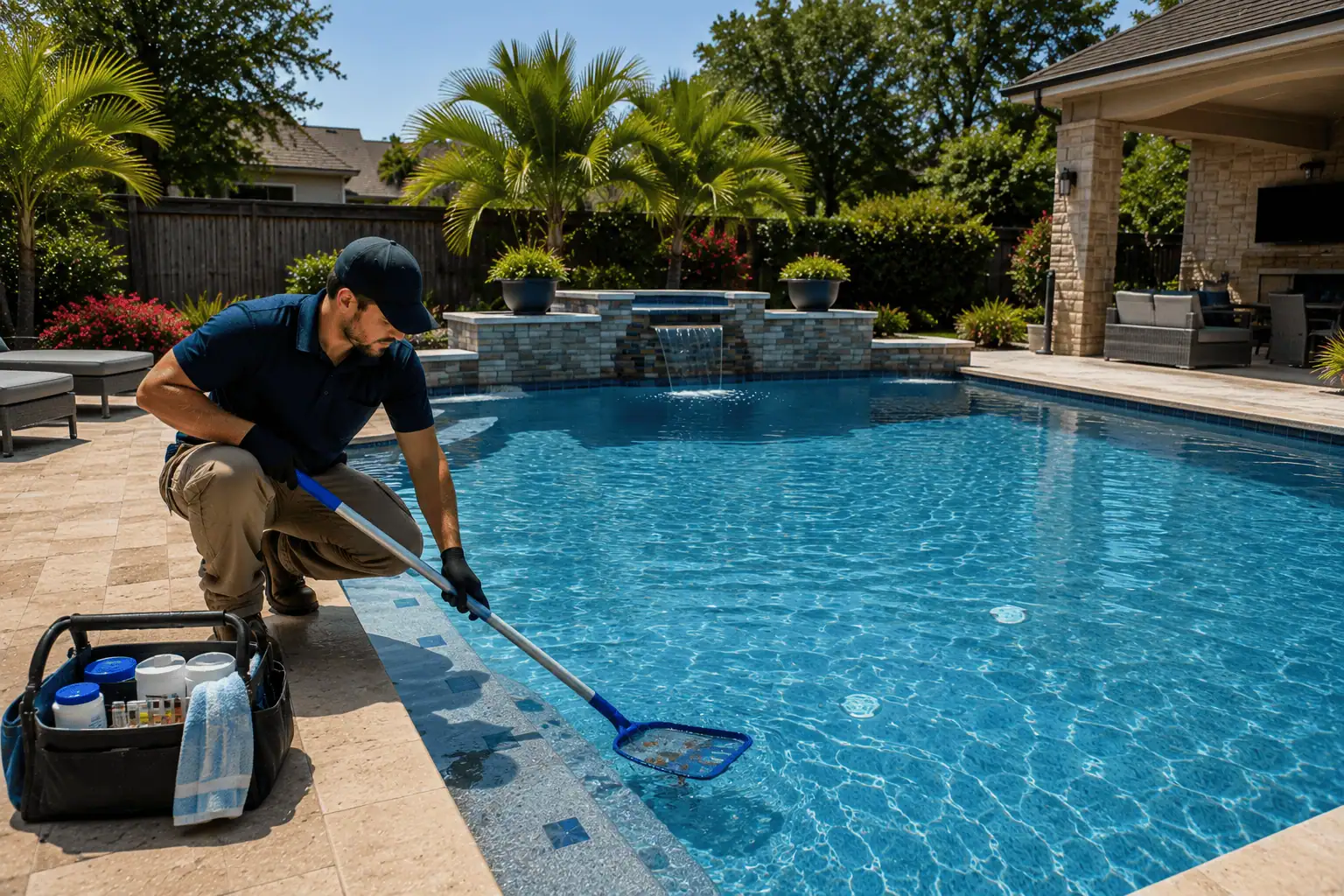
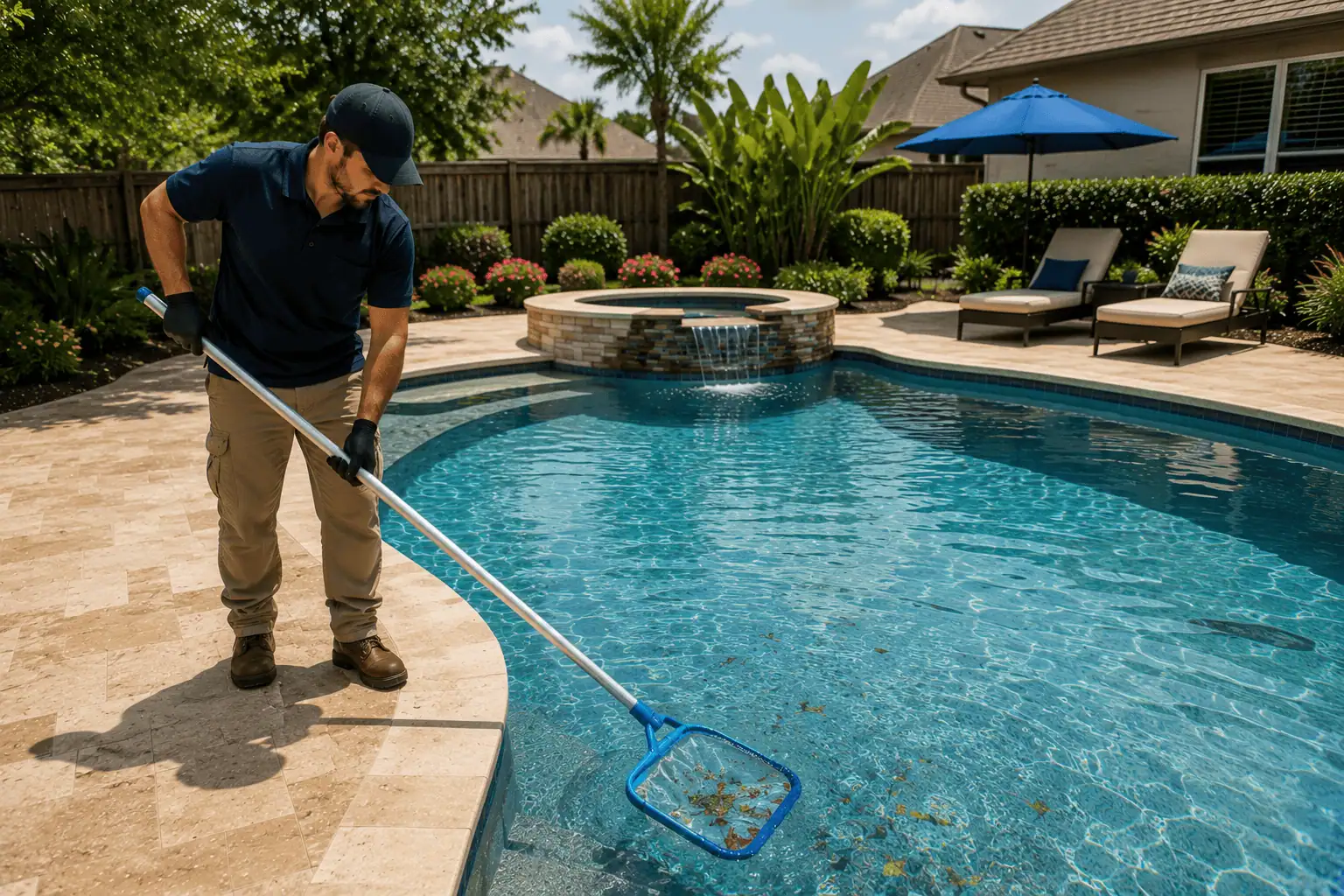
Skim the surface: Remove all floating leaves, pollen, insects, and debris. In neighborhoods with heavy tree coverage like Bellaire, daily skimming between service visits makes a significant difference.
Vacuum the pool floor: Settled debris on the bottom decomposes and feeds phosphates that fuel algae growth. Vacuum the entire floor weekly.
Brush walls, steps, and corners: Algae starts as invisible biofilm on surfaces. Brushing disrupts it before it becomes a visible bloom. Pay extra attention to shaded areas, behind ladders, and along the waterline.
Empty skimmer and pump baskets: Full baskets restrict water flow and strain the pump. Check and empty both every week.
Check the water level: Keep it at mid-skimmer height. Low water starves the pump of flow and can damage seals. Houston’s summer heat causes significant evaporation, so you may need to top off multiple times per week. Retest chemistry after adding fresh water since Houston’s municipal supply contains chloramines and minerals that affect balance.
Check filter pressure: Compare the gauge to your clean baseline. If pressure is 8 to 10 psi above baseline, it’s time to backwash or clean the filter.
Quick equipment check: Listen for unusual pump sounds. Look for visible leaks. Confirm everything is running normally. Catching small issues early prevents expensive failures later.
Shock as needed: Shocking is not a fixed weekly task. Your technician or test results will tell you when it’s necessary. Shock after heavy use, after storms, when chloramine levels are elevated, or when the water looks or smells off. Always shock after sunset so UV doesn’t burn off the chlorine before it works.
Monthly Tasks
Check cyanuric acid (stabilizer): Keep it between 30 and 50 ppm. Stabilizer protects chlorine from UV degradation. In Houston’s sun, this reading is the difference between chlorine lasting all day and chlorine burning off by noon.
Test calcium hardness: Houston’s hard water pushes calcium levels upward over time. Monitor monthly and address it before it climbs above 400 ppm, which causes cloudy water and scale buildup.
Clean or backwash the filter: Even if pressure hasn’t spiked, a monthly filter cleaning keeps filtration at peak performance. For pools running volcanic ash media, backwashing is the only maintenance needed. The media filters down to 2 to 5 microns, is permanent, and never needs replacing.
Inspect the pool deck and coping: Look for new cracks, gaps between the deck and pool, or any signs of clay soil movement. Small cracks caught early are easy to seal. Large ones cost significantly more to fix.
Seasonal Tasks
Spring (March through May)
- Apply a preventive algaecide before water temperatures climb above 75 degrees
- Test for phosphates (spring pollen and tree debris drive phosphate levels up fast)
- Clean the filter thoroughly before the heavy summer season
- Inspect all equipment: pump, heater, automation, salt cell (if equipped)
- Confirm stabilizer level is in range before UV intensity peaks
- Increase pump run time as temperatures rise
Summer (June through September)
- Run the pump 10 to 12 hours daily
- Test chemistry twice per week
- Shock as needed based on water conditions, bather load, and weather events
- Skim daily if possible
- Monitor water level and top off as needed
- Rebalance chemistry immediately after storms
Fall (October through November)
- Increase skimming frequency during leaf drop
- Test for phosphates as organic debris accumulates
- Begin reducing pump run time gradually as temperatures cool
- Schedule a comprehensive equipment inspection after the demanding summer season
Winter (December through February)
- Continue weekly chemistry testing and balancing
- Run the pump continuously any time overnight temperatures drop below 32 degrees to prevent freeze damage in the plumbing
- Maintain chlorine levels (algae can still grow in Houston’s mild winters)
- Schedule any needed resurfacing or repairs during the off-peak season for better contractor availability
Annual Tasks
Schedule a professional equipment inspection. At minimum, have your pump, filter, heater, and electrical connections professionally inspected twice a year (spring and fall). This includes electrical testing that must be done by licensed technicians under Texas state law.
Evaluate your pool surface. Check for roughness, staining, cracking, or signs of deterioration. Standard plaster in Houston typically needs replacing every 7 to 10 years. Quartz lasts longer. Pebble finishes can go 20 or more years.
Review your equipment efficiency. If your pump is more than 7 years old or still single-speed, consider a variable-speed upgrade. If your filter is struggling with Houston’s debris and algae load, volcanic ash media may be the right upgrade.
Assess your deck condition. Look for settling, cracking, or drainage issues caused by Houston’s expansive clay soil. Addressing deck problems during the off-season is easier and often more affordable.
Download the Free Printable Checklist
We’ve put everything above into a clean, one-page PDF you can print and keep by your pool equipment. It covers weekly, monthly, seasonal, and annual tasks in a simple format you can check off as you go.
Download the Free Houston Pool Maintenance Checklist (PDF)
Pin it to the wall near your equipment pad, stick it on the fridge, or hand it to whoever takes care of your pool.
Consistency Is Everything
Every task on this checklist works because it’s done consistently. Skipping a week in January might not hurt. Skipping a week in July almost certainly will. Houston’s climate doesn’t give pool owners the margin that milder cities do.
If managing all of this yourself feels like more than you want to take on, professional weekly pool service is designed to handle exactly this. Cabana Pools Aquatech has been keeping Houston pools clean and well-maintained since 1976.
Contact us for a free quote, or call (713) 467-3700 today.