If you own a pool in Houston, you’ve probably asked yourself this question at least once: how often do I actually need to clean it? The answer isn’t the same here as it would be in Phoenix, Chicago, or even Dallas. Houston’s climate creates a specific set of conditions that directly affect how fast your pool gets dirty, how quickly water chemistry shifts, and how aggressively algae can take hold.
The short answer is once a week at minimum. But the full answer depends on the time of year, how heavily your pool gets used, and whether you’re handling the work yourself or relying on a professional pool cleaning service in Houston.
Here’s a detailed breakdown of what Houston pool owners need to know about pool cleaning schedule, what each session should include, and how to adjust your schedule based on the season.
Why Houston Pools Need More Frequent Cleaning Than Most
Houston sits in one of the most demanding climate zones for pool ownership in the country. Understanding why your pool gets dirty so fast helps you set the right cleaning schedule instead of constantly reacting to problems after they appear.
Heat and Humidity Accelerate Everything
Houston’s average summer temperatures regularly exceed 95 degrees Fahrenheit, and humidity levels hover between 75 and 90 percent for months at a time. This combination creates ideal conditions for algae growth, accelerates chlorine consumption, and causes water chemistry to shift faster than it would in a drier climate.
Chlorine degrades rapidly under intense UV exposure. In Houston’s summer sun, unstabilized chlorine can lose up to 90 percent of its effectiveness within a few hours. That means your sanitizer levels can drop from safe to dangerously low between weekly pool cleanings if it isn’t properly stabilized and maintained.
Tree Debris and Pollen Are Year-Round Problems
Houston’s urban canopy is dense with live oaks, pine trees, and a variety of hardwoods that shed leaves, pollen, seeds, and bark throughout the year. Spring pollen season is especially intense, often coating pool surfaces with a yellow-green film within hours of skimming. Fall brings heavy leaf drop that feeds phosphates and organic contamination if not removed quickly.
Unlike northern climates where debris is primarily a fall problem, Houston pool owners deal with organic matter landing in their water 12 months a year.
Hard Water and Mineral Buildup
Houston’s municipal water supply is moderately hard, with elevated levels of calcium and minerals that contribute to scale buildup on pool surfaces, tile lines, and equipment. Over time, this mineral content affects water clarity, clogs filters, and creates white calcium deposits along the waterline that are difficult to remove once established.
Regular water testing and chemical balancing are essential to managing Houston’s hard water conditions and preventing long-term surface damage.
The Weekly Cleaning Schedule Every Houston Pool Needs
For the vast majority of Houston homeowners, a thorough weekly pool cleaning schedule is the baseline. This isn’t optional or a suggestion. It’s what’s required to keep your water safe, your equipment functioning properly, and your pool looking the way it should.
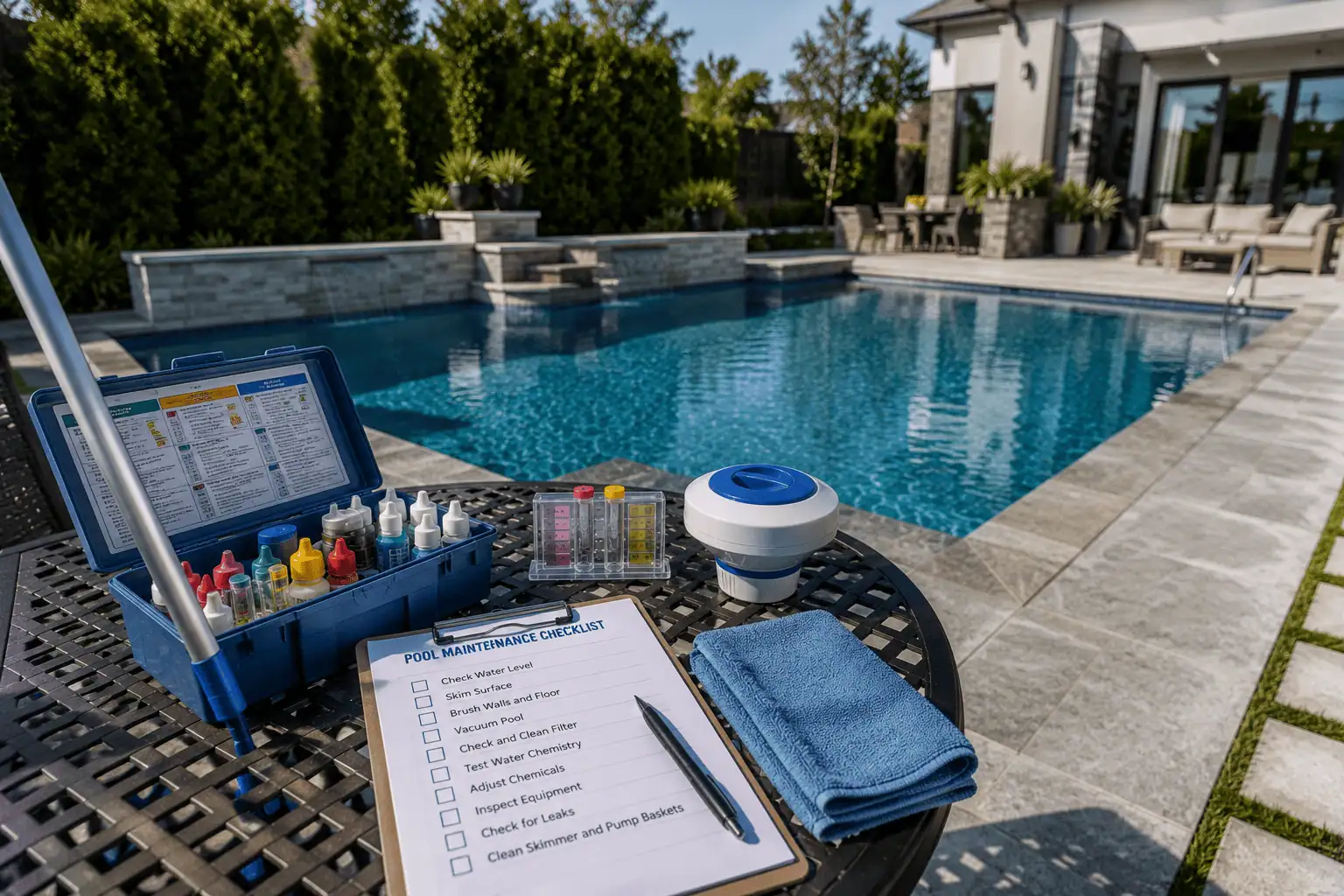
Here’s what a complete weekly pool cleaning session should include:
Skimming, Vacuuming, and Surface Brushing
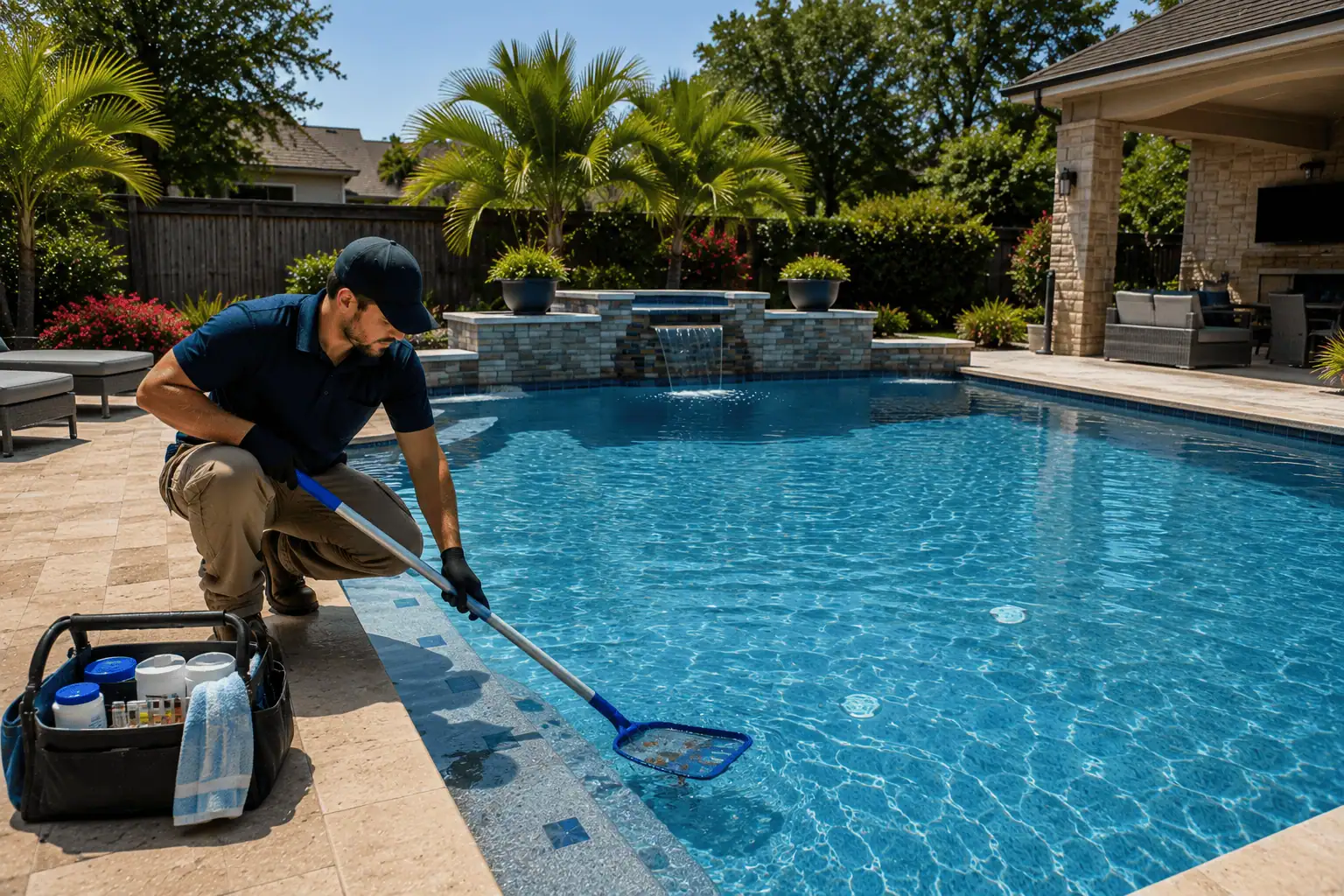
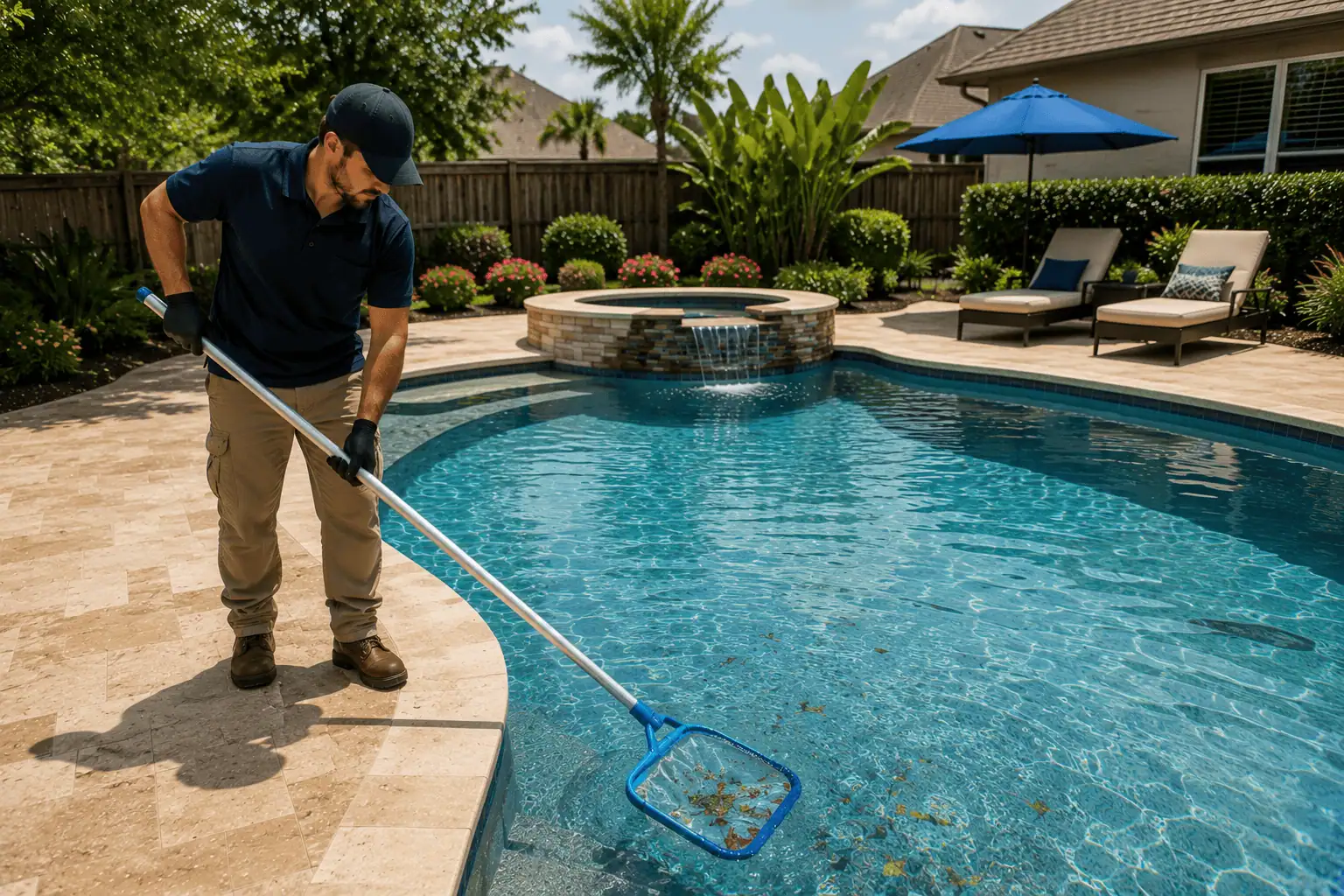
Start with the visible work. Skim the entire surface to remove floating debris, leaves, pollen, and insects. Vacuum the pool floor to pick up settled particles that the skimmer can’t reach. Then brush the walls, steps, benches, and corners, paying special attention to shaded areas and spots with low water circulation where algae tends to attach first.
Brushing is one of the most overlooked steps in pool cleaning. Algae begins as an invisible biofilm on surfaces before it becomes the green water emergency that sends homeowners scrambling. Weekly brushing disrupts that biofilm and keeps surfaces clean. If your pool has textured finishes like pebble or quartz, brushing is even more important because algae can embed in the surface texture.
Water Chemistry Testing and Chemical Balancing
Test your water chemistry at least once a week using a reliable test kit or test strips. The key readings to monitor:
- pH: 7.4 to 7.6. This range is optimal for swimmer comfort and chlorine effectiveness. Houston’s hard water tends to push pH upward, so you’ll likely need to add muriatic acid regularly to keep it in range.
- Free chlorine: 1 to 3 ppm. This is your primary sanitizer. In Houston’s heat, chlorine burns off fast, so stabilized chlorine (with cyanuric acid) is strongly recommended to extend its life in the water.
- Total alkalinity: 80 to 120 ppm. Alkalinity acts as a buffer for pH. If alkalinity drifts too low, your pH will swing wildly with every chemical addition or rainstorm.
- Cyanuric acid (stabilizer): 30 to 50 ppm. This protects chlorine from UV degradation. In Houston’s intense sun, maintaining proper stabilizer levels is critical.
- Calcium hardness: 200 to 400 ppm. Houston’s water supply already contains elevated calcium, so monitor this closely to prevent scale formation.
Chemical balancing is not something you do once and forget about. In Houston’s climate, your numbers will shift between weekly cleanings, especially in summer.
Emptying Skimmer and Pump Baskets
A full skimmer basket restricts water flow into the pump, reducing filtration efficiency and putting unnecessary strain on the motor. A clogged pump basket does the same. Empty both every week, and check more frequently during spring pollen season or after storms.
This is a small task that prevents big problems. Restricted flow is one of the most common causes of premature pump failure, and pump replacement is one of the more expensive pool repairs Houston homeowners face.
Filter Inspection and Cleaning
Your pool filter is the workhorse of your water clarity system, and it needs regular attention to perform well. How you maintain it depends on what type of filter you have.
Sand filters require backwashing when pressure rises 8 to 10 psi above the clean starting pressure. For Houston pools, this typically means backwashing every 4 to 6 weeks in summer and less frequently in cooler months. For even better filtration, consider upgrading to volcanic ash filter media, which filters down to 2 to 5 microns compared to standard sand at 20 to 40 microns. The volcanic ash media is permanent and never needs replacing, making it a significant long-term upgrade over both standard sand and cartridge systems.
Cartridge filters need to be removed and hosed down every 4 to 8 weeks and replaced entirely every 1 to 2 years depending on usage and water conditions.
DE (diatomaceous earth) filters provide excellent filtration but require periodic disassembly, cleaning, and recharging with fresh DE powder.
Weekly Shock Treatment
Shocking your pool once a week during swim season is essential in Houston’s climate. Shock oxidizes organic contaminants, chloramines, and bacteria that regular chlorine levels can’t eliminate. It’s the reset button for your water chemistry.
Always shock after sunset so the chlorine has time to work before UV begins breaking it down the next morning. Increase your shock frequency after heavy rain, large pool parties, or any time you notice a strong chlorine smell, which actually indicates too many chloramines, not too much chlorine.
When You Need to Clean More Than Once a Week
Once a week is the baseline, but Houston’s climate creates plenty of situations where your pool needs attention between scheduled cleanings.
During Peak Summer (June Through September)
When water temperatures climb above 85 degrees Fahrenheit and stay there for weeks at a time, everything accelerates. Chlorine burns off faster, algae grows more aggressively, and evaporation pulls water levels down noticeably. During these months, many Houston homeowners benefit from twice-weekly service or, at minimum, a mid-week chemistry check and top-off.
If your pool gets heavy daily use from family members during the summer, the bather load alone can deplete chlorine levels between weekly cleanings.
After Storms and Heavy Rain
Houston’s storm season brings sudden, heavy downpours that can dump several inches of rain into your pool in a single afternoon. Rainwater is acidic and loaded with contaminants: airborne pollutants, dissolved nitrogen, pollen, dirt, and organic debris from surrounding landscaping.
After any significant rainfall, test your water chemistry immediately. pH and alkalinity will likely need adjusting, and you should add a supplemental shock treatment. Don’t wait for your next scheduled cleaning.
During Hurricane Season
Houston’s hurricane season runs from June through November, and even tropical storms that don’t make direct landfall can bring sustained wind and rain that overwhelm a pool’s filtration system. After a major weather event, your pool may need a complete chemical rebalance, debris removal, and equipment inspection before it’s safe to use again.
If your pool equipment loses power during a storm, don’t run the pump until you’ve confirmed there’s no debris clogging the lines or damage to the motor and electrical connections. All electrical pool repairs should be performed by licensed technicians, which is required by Texas state law. Many pool companies don’t use licensed electricians for this work, so ask before you hire.
During Spring Pollen Season
Houston’s spring pollen season, typically March through May, blankets everything in a fine yellow-green dust. Pool surfaces can be coated within hours of skimming, and pollen that sinks to the bottom feeds phosphates that fuel algae growth later in the season.
During pollen season, skim daily if possible, even if you only do a full cleaning weekly. It takes 60 seconds and prevents a much bigger chemical and filtration headache.
Seasonal Cleaning Adjustments for Houston Pools
Houston pools are used year-round, which means there’s no true off-season for pool maintenance. But the frequency and focus of your cleaning routine should shift with the seasons.
Spring (March Through May)
Spring is when your pool transitions from light winter use to heavy summer demand. This is the time to get aggressive about prevention. Apply a preventive algaecide, clean or backwash your filter thoroughly, and confirm all equipment is operating properly. Inspect your pump, heater, and automation systems for any issues that developed over winter.
Test for phosphates, which accumulate from decaying organic matter over the cooler months. Elevated phosphates are a leading contributor to persistent algae problems that seem to resist normal chlorine treatment.
Summer (June Through September)
This is the most demanding period for Houston pool maintenance. Increase your pump run time to 10 to 12 hours per day to keep water circulating in the extreme heat. Test chemistry twice a week. Shock weekly or more frequently with heavy use. Skim daily and maintain consistent chlorine levels.
A 400,000 BTU gas heater may seem unnecessary in summer, but it’s the most efficient option for quickly heating your pool for evening swims when you want the water warmer after sundown. A larger heater heats faster, runs for less time, and costs less to operate per use than smaller models.
Fall (October Through November)
Leaf drop is the primary challenge in fall. Houston’s live oaks, sweetgums, and pine trees shed heavily beginning in October, and organic debris left in the pool feeds phosphates and creates staining if not removed quickly. Skim more frequently and consider a leaf net if your pool is heavily shaded.
Begin reducing pump run time gradually as temperatures cool, and continue weekly chemical testing.
Winter (December Through February)
Houston winters are mild enough that most pools remain uncovered and at least occasionally used. True winterization isn’t necessary, but you should still maintain weekly cleaning and chemical balancing. Algae growth slows in cooler water but doesn’t stop entirely.
When cold fronts bring overnight temperatures below 32 degrees Fahrenheit, run your pump continuously to prevent freeze damage in the plumbing lines. This is especially important for Houston pools with elevated features, waterfalls, or exposed plumbing runs.
DIY Cleaning vs. Professional Weekly Service
Some Houston homeowners enjoy maintaining their own pool. Others would rather spend that time swimming in it. Both approaches work, but it’s worth being honest about the commitment involved.
What DIY Pool Cleaning Actually Requires
Maintaining a Houston pool yourself means committing to the full weekly routine described above: skimming, vacuuming, brushing, testing, balancing, shocking, and checking equipment. During summer, add mid-week chemistry checks and daily skimming.
You’ll also need to invest in supplies: a quality test kit (not just strip tests), a telescoping pole, skimmer net, vacuum head and hose (or an automatic cleaner), a pool brush, and a steady supply of chemicals including chlorine, muriatic acid, stabilizer, shock, and algaecide.
Most importantly, you need to do it consistently. The single biggest reason DIY pool owners end up with green water, cloudy water, or equipment failures is skipping a week or two when life gets busy. In Houston’s climate, even one missed week during summer can create a problem that takes days and significant chemical cost to correct.
What Professional Pool Cleaning Includes
A full-service professional cleaning, like what Cabana Pools Aquatech provides across Houston, covers every task in the weekly checklist: surface skimming, floor vacuuming, wall and step brushing, water chemistry testing and balancing, skimmer and pump basket cleaning, filter checks, and a visual equipment inspection every visit.
The advantage isn’t just convenience. A professional who services pools across the Houston area every week develops pattern recognition that a homeowner can’t match. They notice early warning signs, catch small equipment issues before they become expensive pool repairs, and maintain chemistry with a consistency that’s hard to replicate on your own.
Cabana Pools Aquatech offers weekly pool service cleaning for Houston homeowners. We don’t offer chemical-only or biweekly service because, frankly, those approaches don’t work in Houston’s climate. A pool that only gets attention every other week in a Houston summer is a pool that’s going to have problems.
How Houston’s Water Quality Affects Your Cleaning Schedule
Houston’s tap water isn’t just hard. It contains elevated levels of calcium, chloramines (used by the city for municipal disinfection), and trace minerals that directly impact pool chemistry. Understanding these factors helps explain why your pool seems to need more attention than you expected.
Calcium and Scale Buildup
Houston’s water hardness means calcium accumulates in your pool faster than it would in areas with softer water. Over time, this creates visible white scale along the waterline, on tile, and inside equipment like heaters and salt cells. If calcium hardness climbs above 400 ppm, you’ll need to partially drain and refill with fresh water to bring it back into range.
Regular waterline brushing and weekly chemistry checks are the best way to stay ahead of calcium buildup before it becomes a costly descaling project.
Chloramine Interaction
Houston’s municipal water is treated with chloramines rather than free chlorine. When you top off your pool with city water, those chloramines interact with your pool’s existing chemistry in ways that can temporarily throw off your readings. After adding significant amounts of fresh water, retest and rebalance your chemistry rather than assuming the previous week’s levels still hold.
Frequently Asked Questions
How often should I clean my pool in Houston, TX?
At minimum, once a week year-round. During Houston’s peak summer months (June through September), twice-weekly service or mid-week chemistry checks are recommended, especially for pools with heavy use. The heat, humidity, and UV intensity in Houston cause chlorine to degrade and algae to grow faster than in most other climates.
Can I clean my pool every other week instead of weekly?
Not in Houston. Biweekly cleaning does not provide enough coverage to maintain safe water chemistry in Houston’s climate. Chlorine levels can drop to zero between biweekly visits during summer, which opens the door to algae blooms, cloudy water, and potential health risks. Weekly service is the minimum for safe, clean water.
What happens if I skip pool cleaning for a week in Houston?
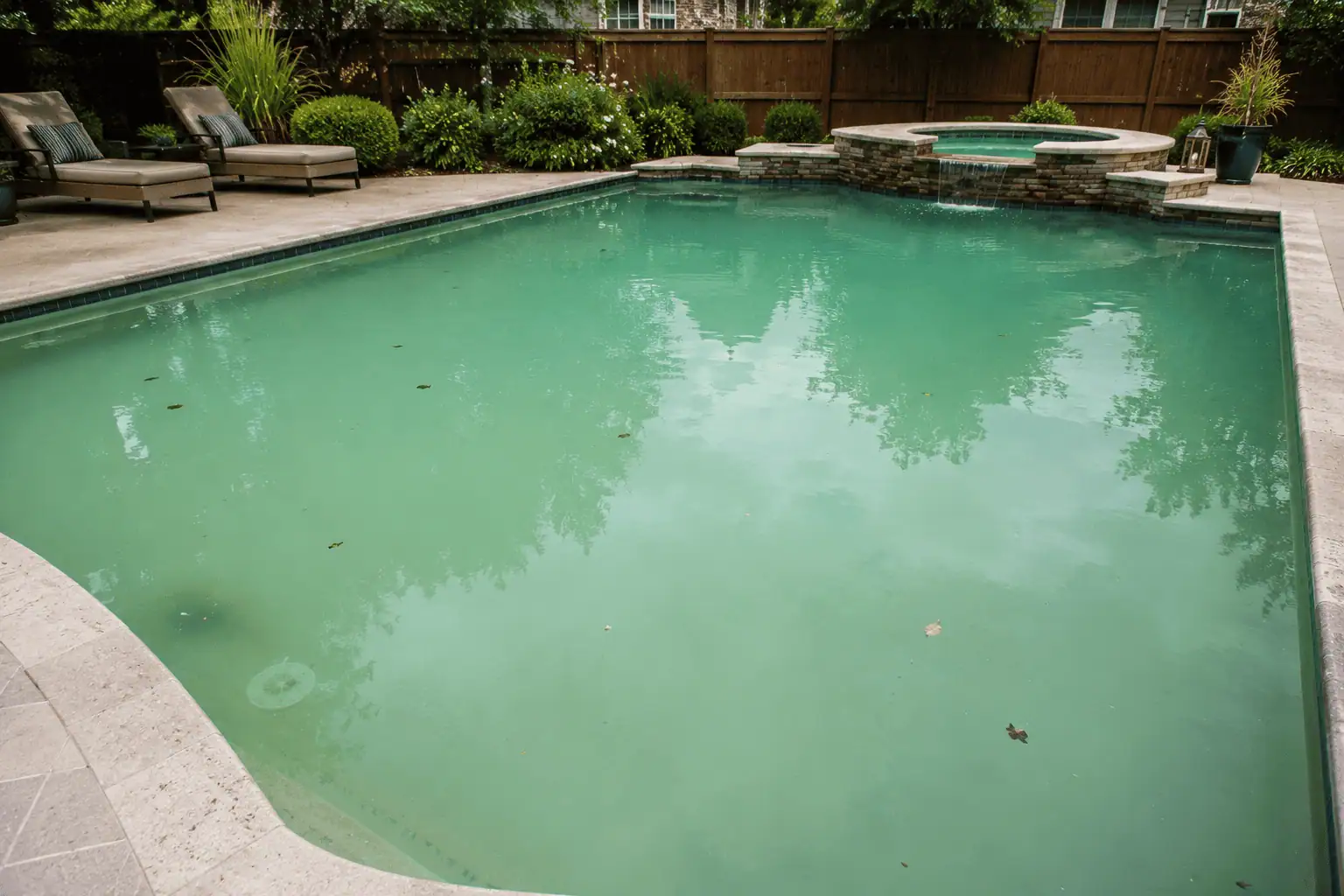
During cooler months, you may not see immediate consequences. During summer, one skipped week can result in a noticeable drop in chlorine, rising pH, visible algae growth, and a cloudy or green pool that requires a heavy shock treatment and multiple days of recovery to correct. The cost of correcting a neglected pool almost always exceeds the cost of consistent weekly maintenance.
How long does a weekly pool cleaning take?
A professional technician with experience and commercial-grade equipment typically completes a thorough pool cleaning in 15 to 30 minutes. That efficiency comes from doing it every day across dozens of pools, knowing exactly what to look for, and having the right tools on hand. For homeowners doing it themselves, the same scope of work usually takes 45 minutes to an hour.
Is pool cleaning more important in summer or winter in Houston?
Summer is the most demanding season for Houston pool cleaning because heat, UV, heavy use, and humidity all stress the water simultaneously. But winter cleaning is still necessary. Houston’s mild winters allow algae to continue growing slowly, and cold fronts can create freeze risks for unprotected equipment and plumbing.
How do I know if my pool needs professional cleaning?
If you’re consistently struggling with cloudy water, recurring algae, fluctuating chemistry, or equipment issues despite your own maintenance efforts, it’s time to call a professional. A trained technician who services Houston pools every week can usually identify and resolve persistent problems within one or two service visits.
Keep Your Houston Pool Clean, Safe, and Ready to Enjoy
The right cleaning frequency for your Houston pool comes down to one simple principle: consistency. A thorough weekly cleaning with the right chemical adjustments, performed reliably every single week, prevents the overwhelming majority of pool problems Houston homeowners face. Add seasonal adjustments for summer intensity, storm recovery, and pollen season, and your pool will stay clear and safe from January through December.
If you’d rather hand the routine to professionals who know Houston pools inside and out, Cabana Pools Aquatech is here to help. We provide full-service weekly pool cleaning for homeowners across Houston, Cypress, Bellaire, River Oaks, Memorial, the Energy Corridor, Katy, Spring Branch, and surrounding communities.
Every visit includes skimming, vacuuming, brushing, full water chemistry testing and balancing, equipment checks, and a detailed service report so you always know exactly what was done and what condition your pool is in.
Contact Cabana Pools Aquatech to schedule your first cleaning, or call us at (713) 467-3700 today.