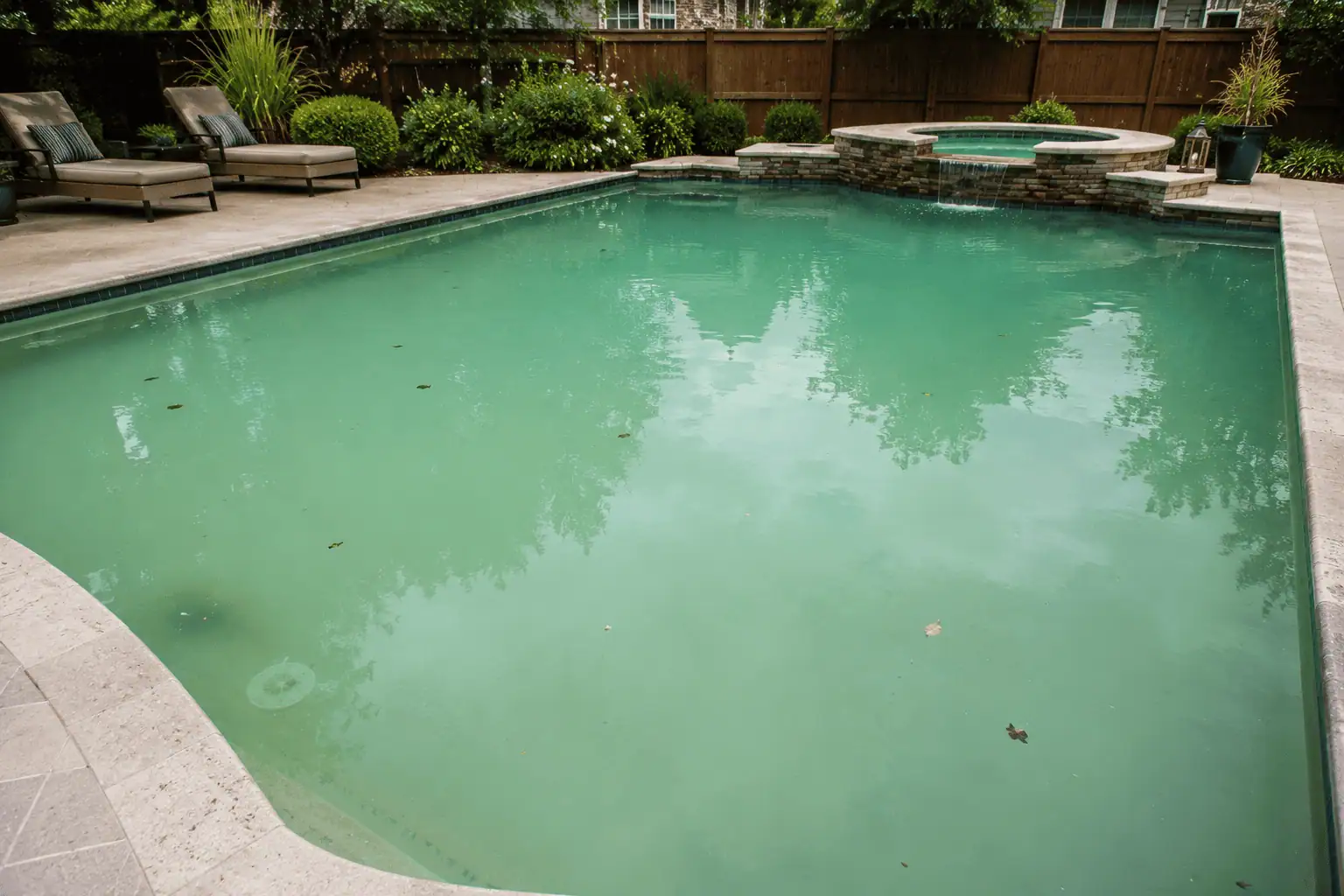
You tested the water two days ago and everything looked fine. Now the pool has a milky haze that makes the deep end disappear. The water isn’t green. It’s not obviously dirty. It just looks off.
Cloudy pool water is one of the most common complaints from Houston homeowners, and it’s also one of the most frustrating because the cause isn’t always obvious. The good news is that cloudy water almost always traces back to one of seven specific problems. Once you identify the right one, the fix is usually straightforward.
Here are the seven most common causes of cloudy pool water in Houston and what to do about each one.
Low or Zero Free Chlorine
This is the number one cause of cloudy water in Houston pools, especially during summer. Free chlorine is what actually sanitizes your water. When it drops below 1 ppm, bacteria and algae begin multiplying. The water turns hazy before it turns green. That cloudiness is the early warning stage of an algae bloom in progress.
Houston’s intense UV burns through chlorine fast. Without adequate cyanuric acid (stabilizer) protecting it, chlorine can drop from safe levels to zero in a single afternoon.
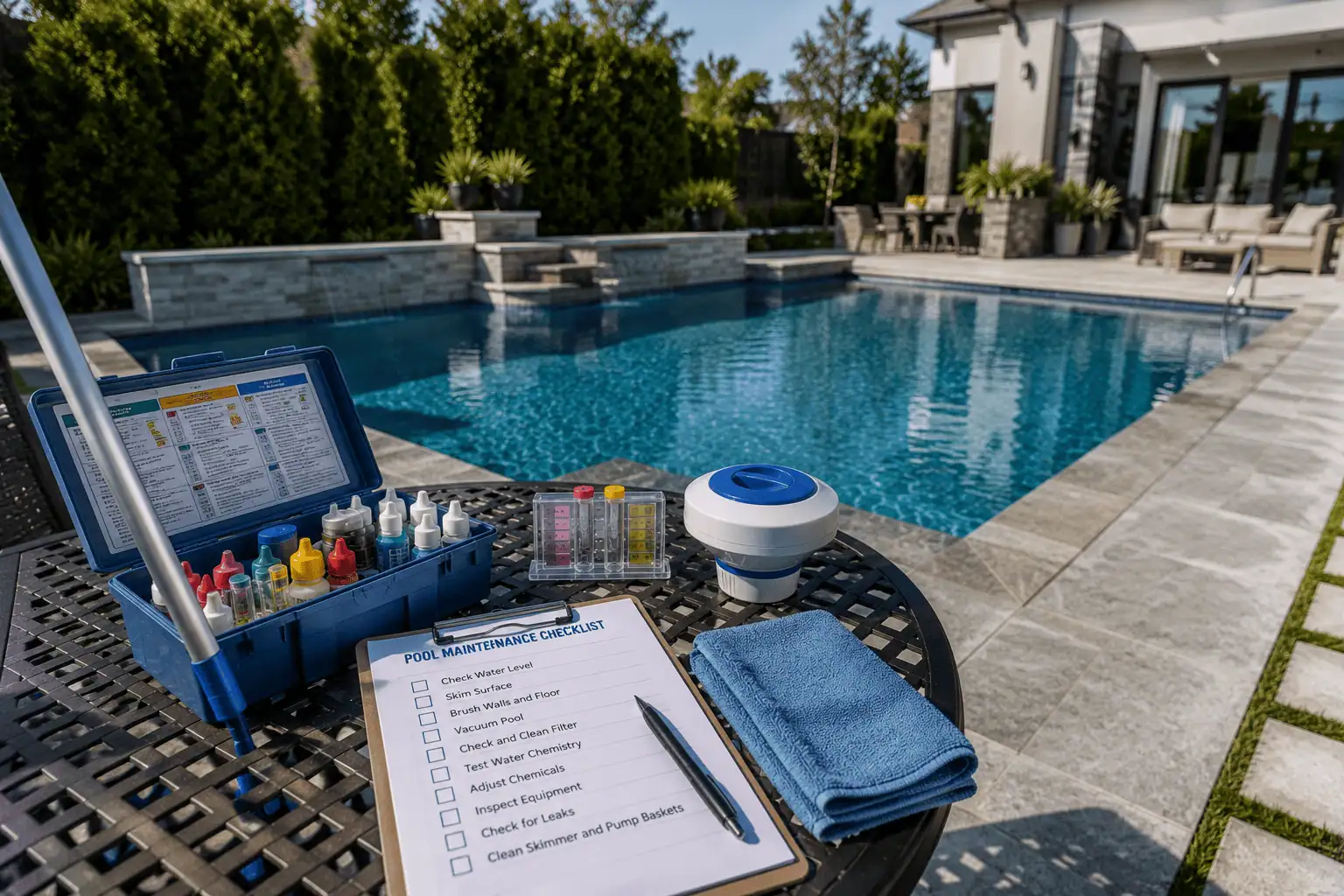
How to fix it: Test your water immediately. If free chlorine is below 1 ppm, shock the pool after sunset and run the pump continuously until the water clears. Make sure your stabilizer level is between 30 and 50 ppm to protect chlorine from UV breakdown. Going forward, test at least twice a week during summer.
pH or Alkalinity Out of Range
When pH climbs above 7.8 or alkalinity drifts above 120 ppm, the water loses its ability to hold minerals in solution. Calcium and other dissolved solids begin falling out of suspension as tiny particles, creating a hazy, milky appearance.
Houston’s hard water naturally pushes pH and calcium levels upward, which makes this a more frequent problem here than in areas with softer water.
How to fix it: Test pH and alkalinity. If pH is above 7.6, add muriatic acid to bring it down to the 7.4 to 7.6 range. If alkalinity is high, the acid will bring both readings down together. Retest after 4 to 6 hours of circulation.
Dirty or Ineffective Filter
Your filter is the only thing physically removing particles from the water. If it’s dirty, clogged, or using media that can’t catch fine particles, the cloudiness isn’t going anywhere no matter how many chemicals you add.
Standard sand filters catch particles down to 20 to 40 microns. That’s adequate for large debris but not for the fine particles that cause cloudiness. Many of those particles are smaller than 10 microns and pass right through conventional sand.
How to fix it: Check your filter pressure. If it’s 8 to 10 psi above the clean baseline, backwash or clean the filter. If pressure is normal but the water stays cloudy, the filter media may not be fine enough for the job.
For Houston pools, upgrading to volcanic ash filter media is the most effective long-term solution. It filters down to 2 to 5 microns, catching the fine particles that standard sand misses entirely. The media is permanent and never needs replacing.
Not Running the Pump Long Enough
Your pump circulates water through the filter and distributes chemicals evenly. If it’s not running long enough, dead zones form in corners, behind steps, and along the pool floor. These stagnant areas develop cloudiness first because particles settle and chemicals can’t reach them.
In Houston’s summer, 6 to 8 hours of pump time isn’t enough. The water is too warm, the chemical demand is too high, and the biological activity is too aggressive for shortened run times.
How to fix it: Run your pump 10 to 12 hours per day from June through September. If energy cost is a concern, a variable-speed pump running 12 hours at low speed uses less electricity than a single-speed running 6 hours at full power. You get better circulation and a lower electric bill at the same time.
High Calcium Hardness
Houston’s municipal water supply contains elevated calcium levels. Every time you top off the pool with city water, you’re adding more calcium. Over time, calcium hardness climbs above 400 ppm and calcium starts precipitating out of solution, creating a persistent milky haze that chemicals alone won’t fix.
How to fix it: Test calcium hardness. If it’s above 400 ppm, the only reliable solution is a partial drain and refill with fresh water to dilute the calcium concentration. There’s no chemical that removes calcium from pool water. Going forward, monitor calcium hardness as part of your regular chemistry testing and address it before it reaches problematic levels.
Heavy Bather Load
A pool party with 15 people introduces a significant amount of sunscreen, body oils, sweat, cosmetics, and organic contaminants into the water. This spike in organic load overwhelms the chlorine, creates chloramines, and produces a hazy, dull appearance that can linger for a day or two.
This is a normal reaction and doesn’t mean anything is wrong with your pool. It just means the water absorbed more contamination in a few hours than it normally gets in a week.
How to fix it: Shock the pool after the party, preferably the same evening. Run the pump overnight. By morning, the water should be clearing. If you host pool parties regularly during Houston’s summer, test the water after each event and shock when conditions call for it.
After a Rainstorm
Houston’s summer thunderstorms dump rainwater that’s acidic, full of dissolved nitrogen, and loaded with airborne contaminants. A heavy storm can crash your pH and alkalinity, dilute your chlorine, and wash dirt, pollen, and organic debris from the deck and landscaping into the pool.
The cloudiness after a storm is a combination of disrupted chemistry and suspended particles that the storm washed in. Waiting for the next scheduled service visit to address it gives the problem time to compound.
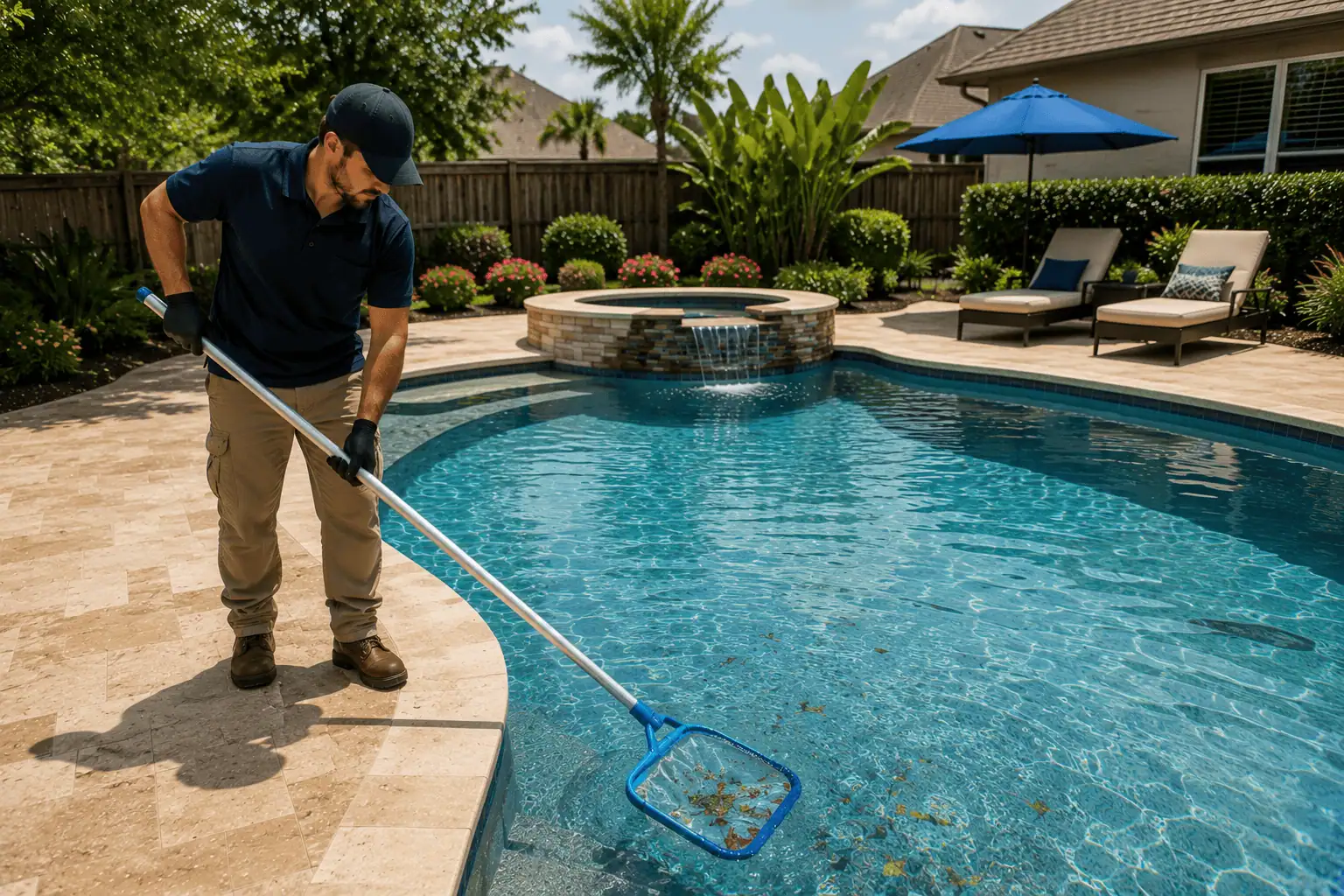
How to fix it: Test and rebalance your chemistry as soon as possible after significant rainfall. Adjust pH and alkalinity first, then shock to restore chlorine levels. Skim debris thoroughly and run the pump continuously until the water clears. If your filter pressure is elevated, backwash or clean the filter to restore flow.
When Cloudy Water Means Something Bigger
Most cloudy water clears up within 24 to 48 hours with the right treatment. If yours doesn’t, or if it keeps coming back despite proper chemistry, the issue may be deeper.
Persistent cloudiness can signal a deteriorating pool surface that’s absorbing chemicals and releasing particles, a filtration system that’s undersized or failing, or a plumbing leak introducing fresh water that constantly dilutes your chemistry.
If you’ve tried the fixes above and the water still won’t clear, it’s time for a professional assessment.
Clear Water Starts with Consistent Care
Cloudy water is almost always preventable. Consistent chlorine levels, proper pH management, adequate pump run time, and a filter that can handle Houston’s conditions keep the water clear week after week.
At Cabana Pools Aquatech, we provide full-service weekly pool cleaning that addresses every cause on this list before it becomes visible. Thorough chemistry testing, proper filtration, and reliable weekly care across Houston, Cypress, Bellaire, Memorial, and surrounding communities since 1976.
Contact us for a free quote, or call (713) 467-3700 today.